Heat Pump Repair in Tampa, FL
Homes here need heat from December through January and cooling from March through November. If your system quits, tell us what it's doing and a licensed contractor who covers Hillsborough County will get in touch.
Tell us about the job
It takes about a minute.
Your heat pump works almost the entire year here
In Hillsborough County your heat pump runs from March through November just to keep the house cool, then switches over for those cold December and January nights that drop to 52°F. That is eleven months of the year with the system on, and almost no real rest for the compressor or the reversing valve.
A machine that runs that much wears in ways a seasonal one doesn't. Summer afternoons near 91°F push the compressor hard for months at a stretch, and the switch into heating mode each winter puts new strain on the reversing valve right when it's had the least use. On top of that, this area sees serious storm winds, 63 damaging events over the last ten years, and outages that can knock the system out entirely. When power drops and comes back, a heat pump that was already struggling often doesn't restart clean.
- 2 months
- December through January, your system heats
- 9 months
- March through November, it cools
- 52°F
- the average winter night it heats against
- 91°F
- the average summer afternoon it cools against
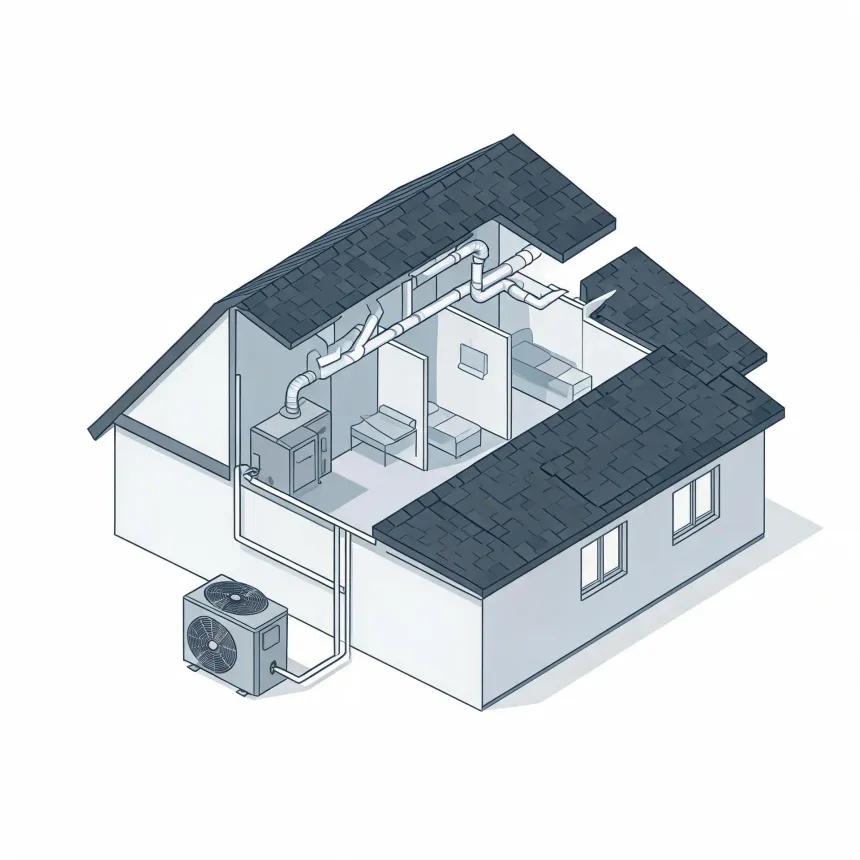
NOAA nClimDiv, 1991–2020 normals
Florida requires HVAC contractors to hold a state license.
The Construction Industry Licensing Board tests contractors before it licenses them, and it keeps a record of who holds one. That license belongs to the contractor, not to any one job, so the same license that covers a heat pump repair covers the next job they take on.
For a heat pump repair, the license is what stands behind the person doing the work. If the repair calls for opening the refrigerant side of the system, whoever does that also has to hold EPA Section 608 certification, which is separate from the state license and required everywhere in the country, not just Florida.
Sources: Florida Legislature · Florida Department of Business and Professional Regulation
- Why is my heat pump blowing cold air?
- In heating mode, air from the vents is naturally cooler than your skin, even when the system is working right, so it can feel cold when it isn't. If the air is truly cold and the house isn't warming up, the problem is often the reversing valve stuck in cooling position, a low refrigerant charge, or ice built up on the outdoor coil. A frozen outdoor unit or a valve that won't switch needs a contractor to check it, since both call for gauges and tools you won't have at home.
- Why is there ice on my heat pump?
- Some frost on the outdoor coil during a cold snap is normal, and your system should run a defrost cycle to clear it on its own. If the coil is coated in thick ice or ice keeps coming back, airflow across that coil is blocked, most often by a dirty coil, a failed defrost control, or a fan that isn't running. Don't chip at the ice yourself. A contractor needs to find out why the defrost cycle isn't clearing it before the coil gets damaged.
- Why is my heat pump running but not cooling?
- If the outdoor unit is running but the house isn't cooling down, the most common causes are a dirty air filter blocking airflow, a refrigerant leak, or ice built up on the indoor or outdoor coil. Summer afternoons here average 91°F, so a system that's lost cooling power gets noticed fast. Check the filter first since that's the one thing you can look at yourself. If it's clean and the house still isn't cooling, the system needs a contractor to check refrigerant charge and look for ice on the coils.