
That musty smell is mold or mildew growing somewhere in your ductwork, usually on the coil or in standing moisture inside the duct itself. Florida air carries a lot of moisture, and when your system cools that humid air, water condenses inside the ducts. If the ducts don't drain and dry properly between cycles, that moisture sits there and grows mold. It's not just unpleasant. Every time the system runs, it's pushing air across that mold and into the rooms you're sitting in. Humid air returning through a dirty filter or a damp return duct feeds the problem further, and it tends to get worse as the system cycles on and off all summer. The smell is a sign of what's building up inside the ducts, not something that clears on its own by running the system more or less. It points to the ducts needing a real cleaning, not a spray or a new filter.


How mold gets into your ducts
- The evaporator coil sits in the humid airstream, so condensation forms on its fins every time the system runs.
- A drain pan and condensate line carry that water away, and a clogged or tilted pan lets water sit instead.
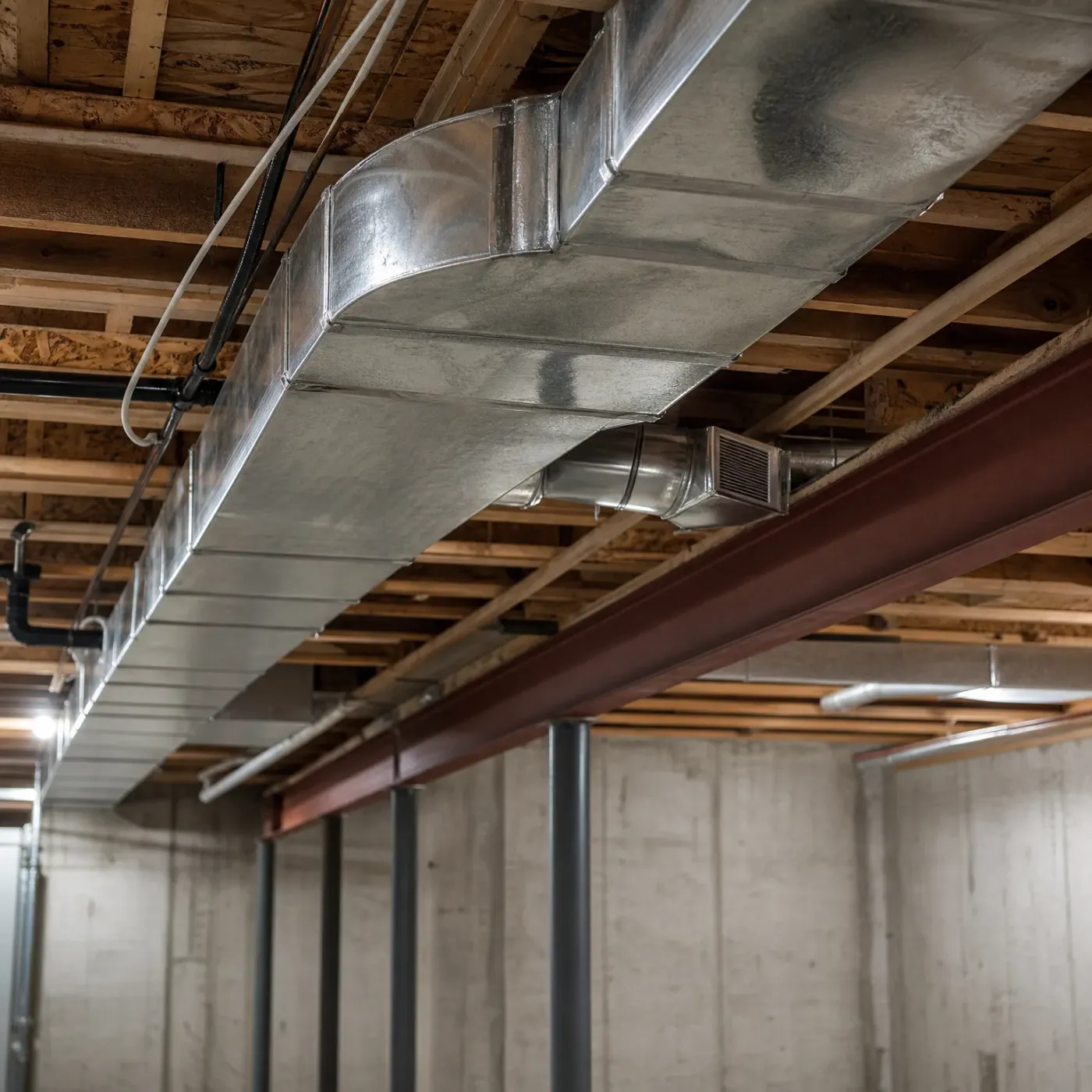
- Flex duct insulation can trap moisture against the duct wall, giving mold a damp surface to grow on for weeks.
- Mold needs darkness, moisture and still air, and a duct system running all summer gives it all three.
- A system that short cycles never runs long enough to dry the coil fully between cooling cycles.
- Return ducts pull in attic or crawlspace air, and dust mixed with moisture inside them feeds the same growth.
Your system's evaporator coil is where the cooling actually happens, and it sits right in the path of the air coming back from your rooms. Florida air carries enough moisture that the coil sweats every time the system runs, the same way a cold glass does on your counter. That water is supposed to drip into a pan below the coil and leave through a condensate line. When the pan tilts, or the line clogs, the water stays put instead of draining away. It sits against metal and insulation that never fully dries out between cycles, especially if your system is cycling on and off quickly rather than running a full, steady stretch. Flex duct, the kind most homes here have running through the attic, has an insulation layer on the inside that can hold moisture against the duct wall once it gets wet. That's a surface mold can settle on and keep growing on for days or weeks without anyone seeing it. Return ducts make this worse in a different way. They pull air from the attic or crawlspace back into the system, and that air often carries dust. Dust mixed with standing moisture is exactly what mold needs to take hold. None of this needs sunlight or open air, just a damp, dark, still space, and a duct system has all three going for it through a Florida summer.




One form, no calling around
Your duct cleaning request goes to one local pro.
Skip calling around for someone who cleans ducts.
You're not committing to anything by asking.
Why does the smell only show up when the AC kicks on?
You notice it the second the AC kicks on. The rest of the time, the air in the house smells fine. That timing feels like a clue, and it is: the smell isn't floating around your house on its own, it's riding on the air coming out of your vents, which means whatever's causing it is inside the system itself, not somewhere else in the room.
The smell is coming from the airstream itself, not the room
Your system only pushes air through the ducts when it's running. The rest of the time, that air sits still, and whatever moisture or mold is in there stays put without reaching you. The moment the blower starts, it pulls air across the coil and through the ductwork and pushes it straight into your rooms, carrying that musty smell along with it. Turn the system off and the air stops moving, so the smell fades even though the mold or moisture causing it hasn't gone anywhere. In Florida, with the AC running most of the year, that cycle repeats often enough that the smell becomes a pattern you can set your watch to.



Humid air crosses the evaporator coil and leaves moisture behind on the fins.
Condensation drips into the drain pan below the coil.
The condensate line carries that water out of the house.
Any water left behind soaks into duct insulation and feeds mold growth.
Power costs 15.21 cents per kilowatt-hour statewide
At 15.21 cents a kilowatt-hour, your air conditioner isn't cheap to run already. Ducts holding moisture make it work harder to push air past that buildup, and a system straining to move air through fouled ductwork pulls more power doing it.
EIA-861 2025 statewide residential average

The smell has a source, and it can be found
The musty smell coming from your vents is moisture sitting somewhere in the ductwork, feeding mold on the coil, in the drain pan, or in the duct insulation itself. It shows up when the AC runs because that's when the air passes over the wet spot and carries the smell into the room with it. Florida's humidity makes this a recurring problem, not a one-time fix you do and forget.
Finding a contractor who actually inspects ducts and coils, rather than just swapping a filter and calling it done, usually means a few calls and a few different answers about what's wrong. A local contractor who works on this kind of system every summer can look at your coil, your drain line, and your duct insulation and tell you which one is holding the water. You get one assessment from someone who knows what grows in Florida ductwork, instead of sorting through several quotes to guess who's right.


Ductwork Cleaning
Skip the search

- A local pro who cleans ducts gets in touch with you.
- Your duct cleaning request goes to a local pro who does this work.

- Send the form and the duct cleaning stops sitting on your list.
- Send the form and finding a duct cleaner is handled.

- Answer a few questions instead of calling shop after shop.
- Describe your ductwork job once, to one pro.
- Your request stays with one local pro.
- Your request goes to one pro, not a list of companies.