









Musty smell from vents in Orlando, FL

After this form, you can stop searching for a duct system pro.

I'm done searching

Why does musty air come out of my vents in Orlando?

You turn on the AC and get a musty smell before the air even cools the room. In Orlando it tends to show up fast after a storm or after the system has sat idle while you were away, and it doesn't always go away once the house cools down. You're not imagining it, and it usually means something specific is sitting in the system rather than just a smell that will pass.

It means moisture is sitting somewhere in your duct system or on the evaporator coil

Musty air almost always means mold or mildew growing on a wet surface inside the system, usually the evaporator coil or the inside of the ductwork near it. Orlando's air carries a lot of moisture for most of the year, and every time your AC runs it pulls that moisture out of the air and onto the coil. If the coil doesn't drain the way it should, or the ducts stay damp between cycles, mold has what it needs to grow. Once it takes hold, the system pushes that smell through the vents every time it runs. A clean filter can hide the smell for a while, but it won't remove mold growing past it in the coil or the ducts themselves.

A smiling man in a dark green sweater sits at a wooden table with a light gray mug in a kitchen with white tile backsplash, pendant lights, and an adjoining living room visible.
A smiling man in a dark gray sweater stands indoors looking to the side, with a kitchen counter holding a ceramic mug and open wooden shelves behind him and a living area in the background.
A smiling man in a dark blue button-up shirt stands at a white kitchen island, with open shelving, a gas range, a potted plant and a window in the background.
A smiling man with dark wavy hair and a beard, wearing a dark green knit sweater, sits in an open-plan living room and kitchen with a brown sofa, large windows, and a counter holding a mug and a wooden bowl.

Why does the musty smell keep coming back in your Orlando home?

  • Half the homes here were built by 1994

    Half the homes in Orange County were built in 1994 or earlier, and ductwork that age has had decades to collect dust and moisture that feed the smell.

  • Heat runs December through January

    Cooling runs here from March through November, about nine months a year, so the coil and ducts stay damp most of the time mold needs to grow.

  • Cooling runs March through November

    Heat only runs December and January here, so the system sits idle the rest of the year with moisture in the ducts and nothing drying it out.

ACS 2020-2024 · NOAA nClimDiv 1991-2020

A quick spray and air freshener

You can mask the smell with a can of duct freshener or a filter treated with scent, and the vent will smell fine for a day or two. It doesn't touch what's growing in the duct or the coil, so the smell comes back, usually worse, because the moisture that's feeding it never went anywhere. Spraying something into a supply vent can also push a scented chemical straight into air you're breathing all day. It's cheap and it's fast, and for a one-time thing, like having people over this weekend, that might be all you want. It's not a fix for a smell that keeps returning month after month.

Having the ducts cleaned

A contractor opens the system, gets into the supply and return runs, and physically removes what's built up on the walls of the ductwork and around the coil. That's the part a spray can't reach. In a system that's sat through an Orlando summer with the AC cycling on and off, moisture collects on cooler surfaces inside the ducts, and dust and debris give it something to grow on. Cleaning takes that out instead of covering it. It won't stop new growth from starting again if there's a standing moisture problem elsewhere in the system, but it removes what's already there and causing the smell right now.

A bearded man in a dark t-shirt sits on a light sofa, smiling and looking down toward a laptop screen visible at the bottom edge of the frame, with a blurred living space behind him.
A bearded man in a plaid flannel shirt looks out a window at snow-covered conifer trees, with a steaming ceramic mug on the sill and wooden shelves holding dishes and a plant behind him.

Where the smell actually starts

  • Warm, moist air moving across a cold evaporator coil condenses there, and anything the coil can't shed stays wet between cycles.
  • The coil sits in a drain pan that feeds a condensate line, and a clogged or slow line lets water sit instead of draining away.
  • A return duct that isn't sealed tight pulls in attic air, and attic air in Orlando carries enough moisture to feed growth inside the duct.
  • Dust on the coil and in the duct lining gives mold something to grow on once the surface stays damp long enough.
  • The smell usually gets stronger right when the blower kicks on, because that's when air first moves past the wet coil and duct surfaces.
  • A system sized too large for the house cools the air fast but doesn't run long enough each cycle to pull much moisture out.

Your air conditioner cools by pulling heat out of the air, and the evaporator coil is where that happens. Warm, humid air passes over the cold coil, and the moisture in it condenses on the metal the same way it beads up on a cold glass. In a house in Orlando, that coil is dealing with a lot of moisture most months of the year. Some of that water drips into the drain pan below the coil and leaves through the condensate line. If that line is slow or partly clogged, water backs up and sits instead of draining, and standing water next to a dusty coil is exactly what mold needs. The duct system adds to it. If the return side isn't sealed well, it pulls in air from the attic, and attic air here carries plenty of moisture to feed whatever is already growing on the coil or the duct lining. None of this needs a flood or a leak you'd notice. A coil that stays damp between cycles and a duct lining with some dust on it is enough. That's also why the smell is strongest right when the system kicks on, since that's the moment air first moves across the wet coil and pushes whatever's grown there out through the vents. A system that's oversized for the house makes this worse, because it cools the air quickly and shuts off before it's run long enough to actually dry the coil out.

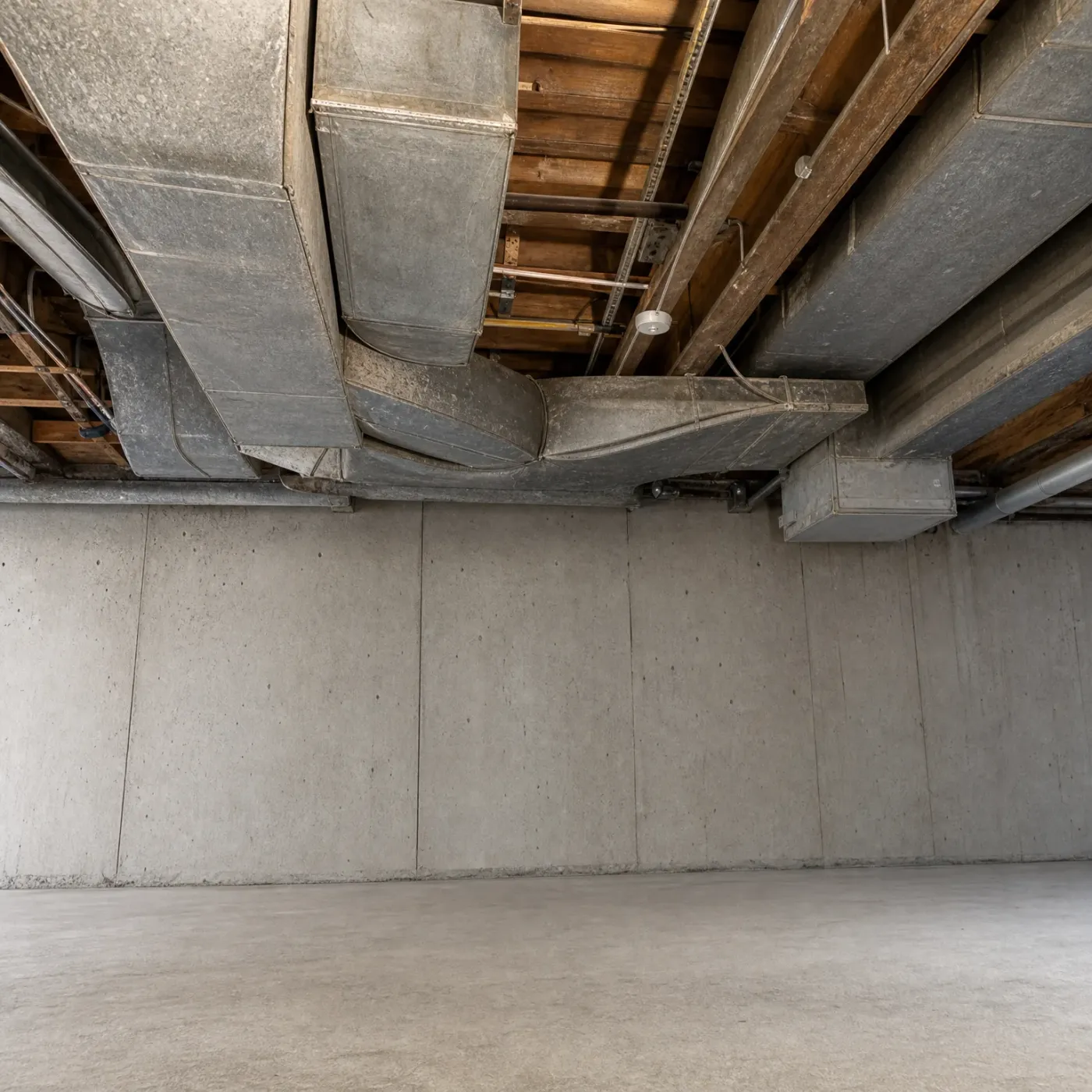
Empty basement room with bare concrete walls and floor, and an exposed ceiling of wooden joists with large galvanized sheet-metal ductwork and pipes.
Before you get your ductwork cleaning
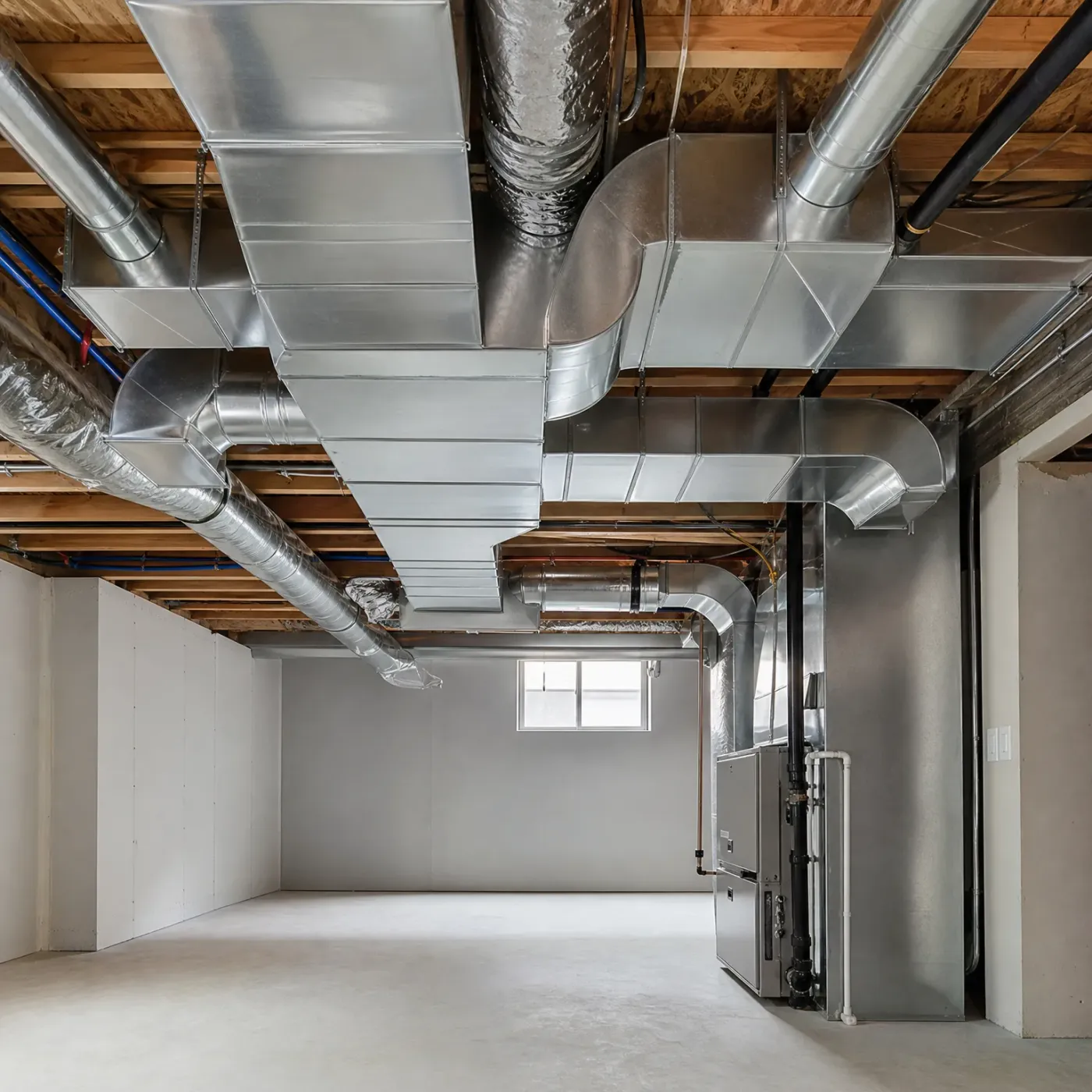
Unfinished basement with exposed wood joists, galvanized sheet-metal ductwork, insulated flex ducts, piping, a small window, and a furnace or air handler against a gray wall.
After you get your ductwork cleaning
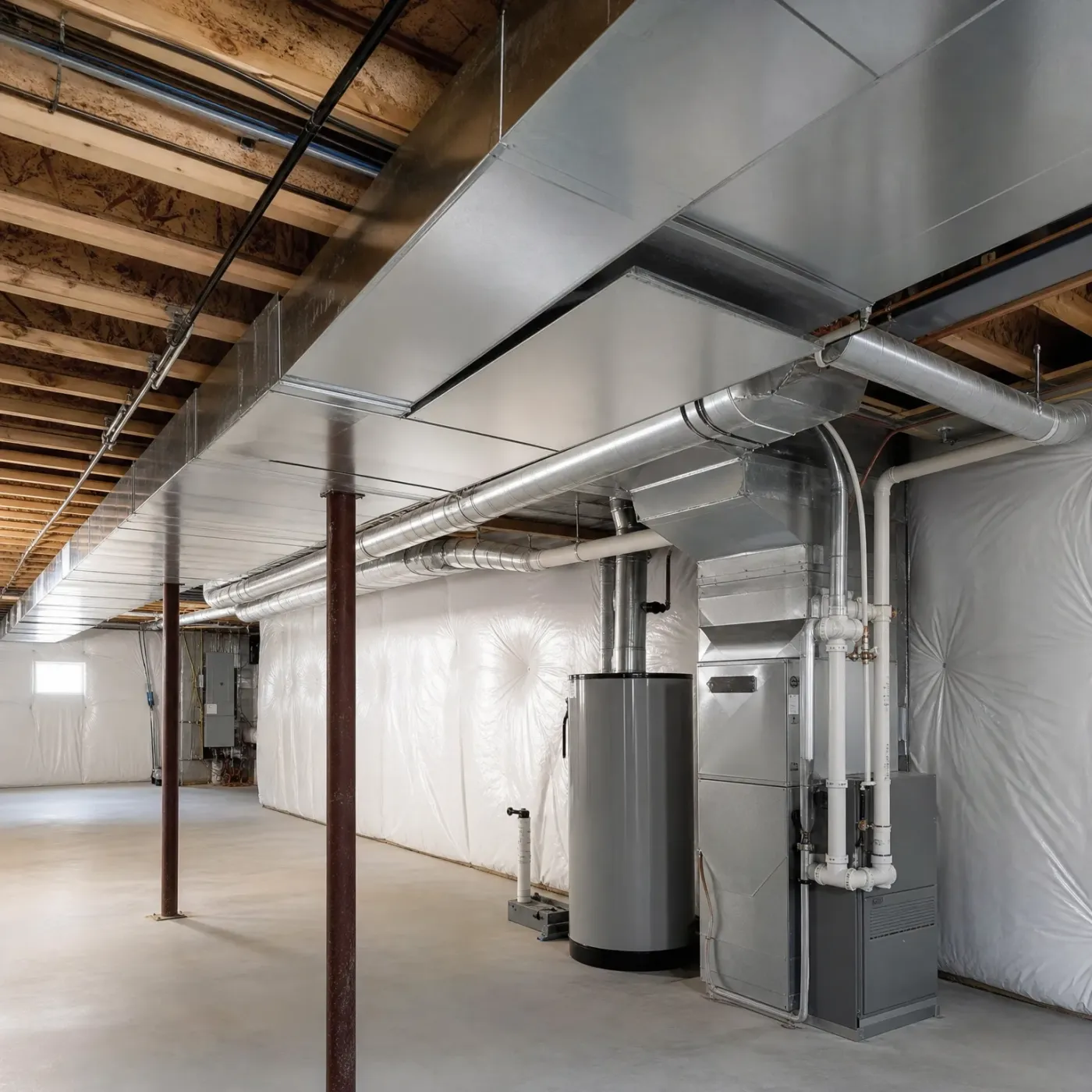
Unfinished basement with concrete floor, plastic-sheeted insulated walls, exposed wood joists, metal support posts, sheet-metal supply ducts, a cylindrical water heater and a furnace with PVC piping.

It's off your list after this

The pro who gets in touch is licensed in Florida and works in Orange County.

One request and the search for a pro is handled.

Hand it over

Asking costs nothing, and the choice to hire stays yours.

Duct Cleaning Alone or a Full Inspection

Duct cleaning alone

  • Clears the dust and debris sitting in the ductwork itself, which is where a lot of the musty smell starts.
  • Doesn't touch the evaporator coil, and a coil with growth on it will keep feeding the same smell back into the air.
  • Leaves the condensate line and drain pan alone, so a slow drain can still leave standing water for mold to use.
  • Works best when the smell is new and hasn't had time to spread past the duct runs.
  • Costs less upfront since it's one part of the system instead of the whole path air travels through.

Full HVAC inspection with the cleaning

  • Checks the coil along with the ducts, so growth on the coil gets found instead of left to keep producing the smell.
  • Looks at the condensate line and drain pan, since a clog there is one of the more common reasons the smell keeps coming back in Orlando.
  • Catches a problem early, before a slow drain backs up or standing water sits long enough to spread past the coil.
  • Gives you a straight answer on whether the smell is coming from the ducts, the coil, or the drain, instead of guessing.
  • Takes more time up front since more of the system gets looked at, not just the ductwork.
Basement interior showing a furnace with sheet-metal ductwork, a round flue pipe and copper lines running beneath exposed wooden floor joists next to a plain light-colored wall.

The coil sits behind the filter

Your filter catches dust before it reaches the evaporator coil, but it doesn't stop moisture. Air passes through the coil every time the system runs, and whatever is growing on those fins rides along with it straight into the ductwork. A filter change helps the air you breathe but does nothing for a coil that's already wet and growing something. That's one reason the smell can return within days of a fresh filter going in.

Interior corner of a building with a large blank white wall beside an unfinished ceiling showing wood joists, galvanized sheet-metal ductwork, and white and copper pipes.

Humidity here keeps the duct damp

Orlando air carries a lot of moisture most of the year, and that moisture doesn't stop at the coil. Some of it works into the ductwork itself, especially in sections that run through a hot attic where temperature swings cause condensation on the duct's outer surface. Metal ducts can sweat under the right conditions, and that dampness gives mold somewhere else to take hold besides the coil. A duct system that stays damp between cycles keeps feeding the smell long after the coil has been cleaned.

Is the smell just in one room, or everywhere?

Check the vents in a few different rooms. If the smell is strongest near one return or one room, you might be looking at a local issue, like a wet spot in that run of duct. If it's coming from every vent in the house, the source is likely the coil or the drain pan, since every room's air passes through the same equipment before it reaches you. Either way, the smell riding into your bedrooms and living room is a sign that mold or mildew has a foothold somewhere in the system. Left alone, it keeps spreading spores through the air you and your family breathe every time the system runs, not just when you notice the smell.

Unfinished basement with concrete walls and floor, a steel beam on posts, and exposed wooden joists with sheet-metal ductwork and piping overhead.

Ductwork moving clean air

This is what a duct run looks like when it's doing its job. Air moves through the metal with nothing sitting on the inside walls to feed a smell. The joists and slab stay dry, and the system cycles air without picking up anything extra along the way.

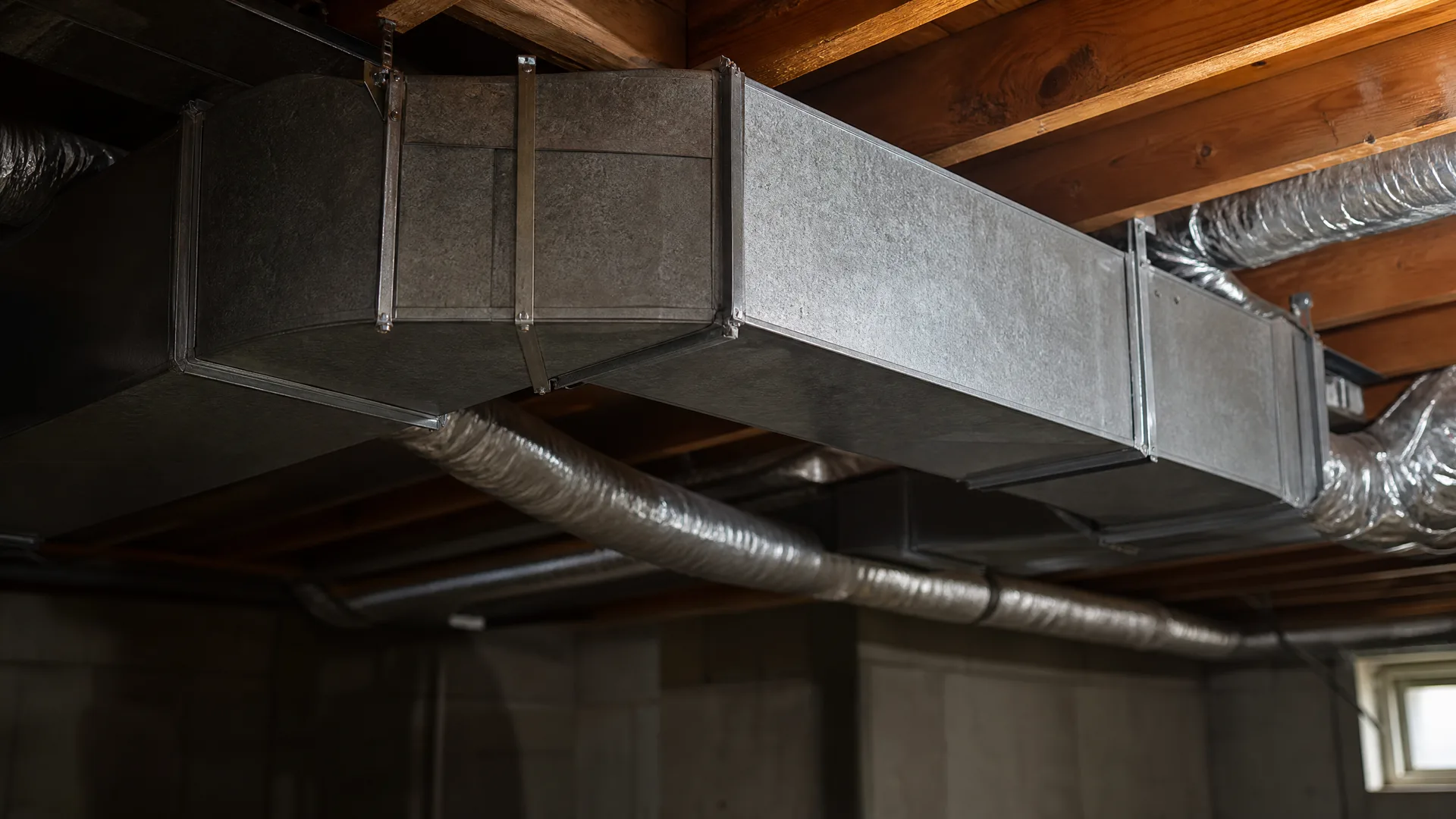
Unfinished basement with bare concrete walls and floor, and galvanized sheet-metal HVAC ducts, pipes and wiring running along the wood-joist ceiling.

Ductwork holding onto moisture

Dust and damp air settle inside runs like these, and that's what gives the smell somewhere to grow. The ducts still move air fine, but every cycle pushes that smell back out through your vents instead of clearing it.

Power here costs 16.02 cents per kilowatt-hour

At 16.02 cents per kilowatt-hour, running the blower longer than it needs to costs you real money. A duct system clogged with dust and growth makes the air handler work harder to push air through, and that extra runtime shows up on your bill every month until the ducts are cleared.

EIA-861 2025

The musty smell coming out of your vents is almost always moisture sitting somewhere it shouldn't, in the ductwork, on the coil, or both, and it keeps coming back until that moisture and whatever is feeding on it gets cleaned out. Masking it doesn't fix it. Running the AC harder doesn't fix it. A contractor who services Orange County systems all year has seen this exact complaint more times than he can count, in homes with ductwork much like yours, and knows whether what you're describing points to the ducts, the coil, or the condensate line before he even opens a panel. You'll be matched with one licensed local contractor, not a handful of companies competing for the job, so the person who shows up already has a sense of what's likely going on and can check it directly instead of guessing. Once you send the request, finding that person is off your plate. You know what's causing the smell now, and you know what it takes to get rid of it for good.

Rectangular sheet-metal HVAC trunk ducting and insulated flexible ducts running along wooden floor joists in an unfinished basement ceiling above concrete block walls.

Stop chasing a duct system pro

Duct and vent cleaningDucts or ventsOrange County, FL
Step 1 of 2

What ZIP code is the job in?