

Call around on your own
You'd be tracking down duct cleaners, explaining your Hillsborough County duct setup to each one, and lining up quotes to compare before you even get someone scheduled.
Skip searching for someone who cleans ducts in Hillsborough County.
Answer a few questionsDust builds up fast here because your air conditioner is running most of the year, and every pass of air through the ducts stirs up what settles in them. Tampa summers are long and humid, so the system cycles on and off constantly from spring into fall, pulling air through the same duct runs, registers, and filter over and over. If the filter is the wrong size, loose, or overdue to be changed, it stops catching what it should and dust gets pushed right back into the rooms instead. Leaky or dirty ductwork adds to it, since gaps let in dust from the attic or crawlspace with every cycle. The result shows up as a fine layer on furniture and floors within days of cleaning, dust near the vents especially, and it tends to get worse the more the system runs. A duct cleaning and a close look at the filter and seals usually tells you where it's coming from.
Half the homes here were built by 1991
Half the ductwork here dates to 1991 or earlier, and ducts that old have had decades to develop gaps and loose seams that pull in dust with every cycle.
Heat runs December through January
Cooling runs March through November here, nine months of the year, so air is moving through those ducts almost constantly and carrying dust with it.
Cooling runs March through November
Heat only runs December and January, so for most of the year it's the AC doing the work, pulling household dust through the same path over and over.
ACS 2020-2024 · NOAA nClimDiv 1991-2020
Your system is built to pull air in, push it past the filter, and send it back out through the vents. That part works fine when the ducts are sealed and the filter is doing its job. The trouble starts at the gaps. A duct boot that's come loose where it meets the floor or ceiling doesn't know the difference between room air and attic air, so it pulls in whatever is nearest, dust included. A return leak is worse, because it means the system is drawing in dirty air before that air ever reaches the filter. By the time it's noticed, dust has already gone through the blower and out every vent in the house.
Even a duct system with no leaks at all collects dust just sitting there. Air moves fast when the blower is running, then slows and stops between cycles, and whatever dust was stirred up settles along the duct walls instead of making it all the way out. The next cycle picks some of it back up and carries it into the room. Flex duct makes this worse where it sags or kinks, since dust collects in the low point instead of traveling through, and sits there until the airflow is strong enough to move it again. A clogged filter or a dirty coil adds to all of this, because the blower has to push harder to move the same amount of air, and that extra force is what carries more of the settled dust back into the house instead of leaving it where it landed.






The pro who gets in touch is licensed in Florida and works in Hillsborough County.
You're not committing to anything by asking.
Nine months of cooling means the blower in your attic runs nine months of cooling cycles, and every one pushes air through the same gaps and seams in the duct run.
A duct system sealed tight moves that same air without picking up anything extra, which is why the fix is the ducts, not the filter you keep changing.


You're the one who notices it first. Dust on the ceiling fan blades again a few days after you wiped them down. A film on the TV screen, on the windowsills, on the dark furniture in rooms nobody even sits in. You run the vacuum more than you used to and it still looks like you skipped a week. If anyone in the house has allergies or asthma, you've probably noticed they do worse indoors than you'd expect, especially after the AC has been running all day. That's not bad luck. That's the duct system feeding dust into every room through the vents, all day, every day it runs.
Nothing about this fixes itself. The gaps in a duct system don't close up on their own, and the dust they pull in keeps landing on the coil and the blower wheel, which makes the air handler work harder to push air through your vents. Harder work there tends to show up on your power bill, especially with the AC cycling as much as it does here. The filter can only catch what passes through it, so dust that enters through a duct gap skips the filter entirely and goes straight to your furniture, your floors, and your lungs, cycle after cycle, month after month.


You'd be tracking down duct cleaners, explaining your Hillsborough County duct setup to each one, and lining up quotes to compare before you even get someone scheduled.
You get matched with a licensed local contractor who works on duct systems like yours all year and knows what nine months of cooling does to them.
At almost 17 cents a kilowatt-hour, every extra hour your blower runs to push air through dusty, leaky ducts shows up on the bill. Clean ducts move air without a fight, so the motor isn't working overtime just to keep your house breathing.
EIA-861 2025
Dust and debris settle inside the duct runs over time.
Loose seams and gaps pull in attic and basement air.
The blower pushes that mix of air through the whole system.
Vacuum trucks pull the loosened debris out through access points.
You dust the shelves on Saturday and by Wednesday there's a layer back on them. The return air grate has a gray film across it. Vents leave faint smudge marks on the ceiling or wall around them. Your allergies act up indoors as much as they do outside, sometimes more. If anyone in the house has asthma or sinus trouble, dust this constant keeps it stirred up instead of letting it settle. Left alone, it's also more for the system to pull through the coil and filter every time the blower kicks on, which is most of the day here from spring into fall.

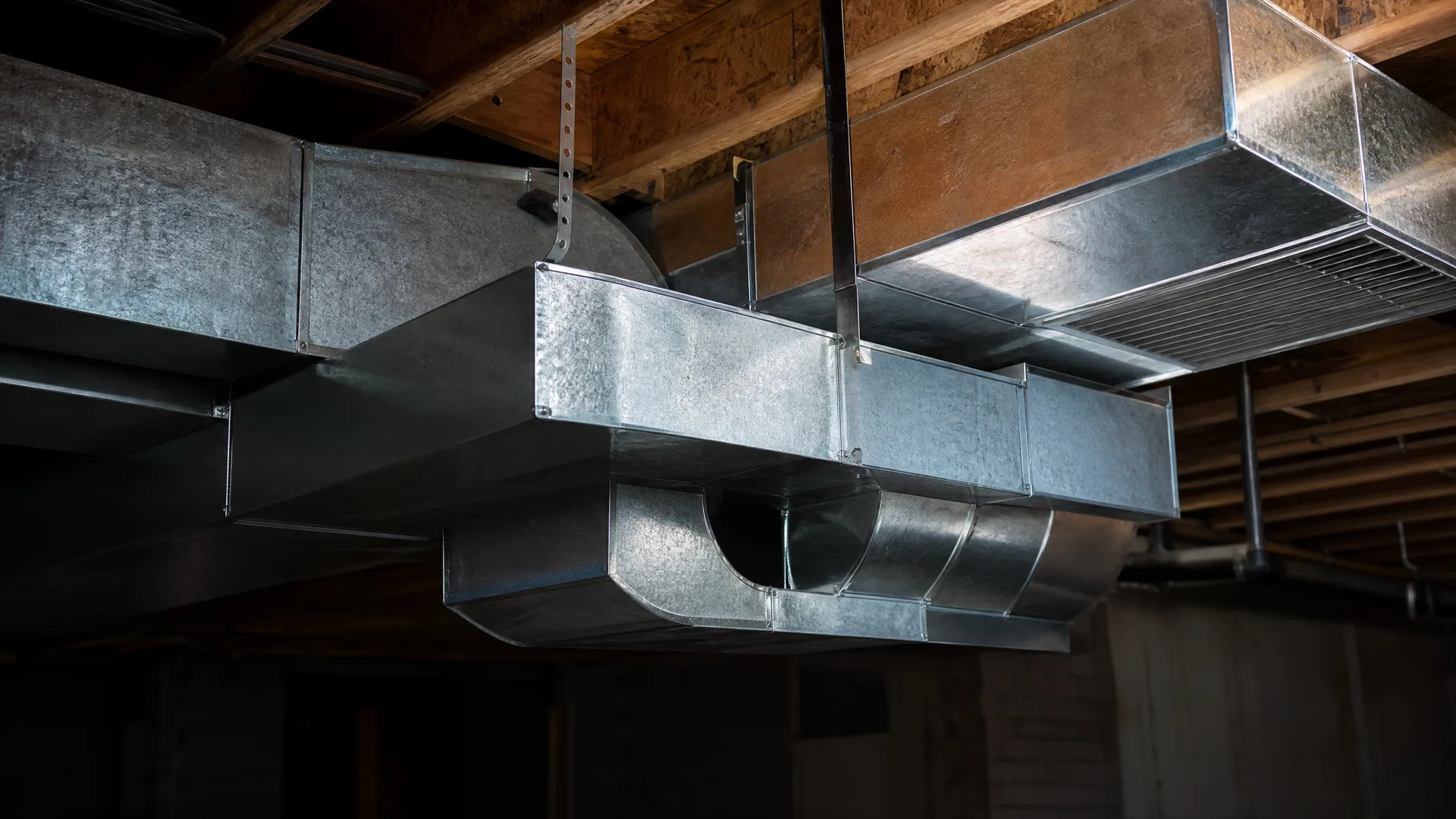
These runs are supported along the joists, seams fitted tight, with no sagging sections working loose over time. Air moves from the handler through the ducts and out the vents without picking up anything extra along the way.

Years of dust have settled thick on every surface of these ducts, and that layer feeds back into the airflow with each cycle. Gaps in the seams pull in crawl space air too, so the blower is pushing dust into every room it reaches.

The dust in your house isn't about how often you clean. It's about what's moving through your ductwork every time the blower kicks on, nine months a year. Gaps in old duct runs pull in attic and basement air, and the blower spreads it through every vent in the house. Sealed, supported ducts don't do that.
Finding someone to deal with it is its own chore. You'd be calling around Hillsborough County, explaining your duct setup more than once, and stacking up quotes to compare before anyone even looks at your attic. A match here means one licensed local contractor who already knows what Tampa duct systems your age tend to have wrong with them, not a list of strangers to screen yourself.

Skip calling around