Mini Split Installation in Deltona, FL
A new system here will heat from December through February and cool from March through November every year. Tell us about the house, and a licensed contractor who covers Volusia County will get in touch.
Tell us about the job
It takes about a minute.
A mini-split in Deltona works almost every day of the year
Nine months of cooling, March through November, with summer afternoons averaging 91°F. Then three months of heat when winter nights drop to 50°F on average. That leaves the system idle only in the shoulder weeks between seasons, so whatever gets installed needs to hold up under near constant use.
A new mini-split has to meet the federal minimum for split-system heat pumps, 14.3 SEER2 for cooling and 7.5 HSPF2 for heating. Florida also sees its share of power loss, with 38% of households going at least a day without electricity in 2024 and 27 damaging wind events recorded here over the past ten years. Worth asking how a new system's outdoor unit is mounted and protected before it goes in.
- 3 months
- December through February, your system heats
- 9 months
- March through November, it cools
- 50°F
- the average winter night it heats against
- 91°F
- the average summer afternoon it cools against
NOAA nClimDiv, 1991–2020 normals
Florida requires HVAC contractors to hold a state license.
The Construction Industry Licensing Board tests contractors before they can hold this license, and it keeps a record of who holds one. That license belongs to the contractor, not to any one job, so the same license that qualifies someone to install a mini-split covers the other HVAC work they do.
For this installation, the license is what stands behind the person doing the work. Alongside it, most cities and counties in Florida require a permit for this kind of installation and an inspection once it is done, which gives a second check on the work beyond the contractor's own license.
Sources: Florida Legislature · Florida Department of Business and Professional Regulation
- Is a mini split worth it?
- For most homes here, yes, since the system needs to run nine months of cooling and three months of heat every year. A mini split handles both from one outdoor unit, and because it's ductless, it won't lose air through duct leaks the way a central system can. It also lets you cool or heat just the rooms in use, which matters when summer afternoons sit near 91°F for so much of the year. A contractor can size the system to your house and tell you what it would take to install.
- How many rooms can a mini split cover?
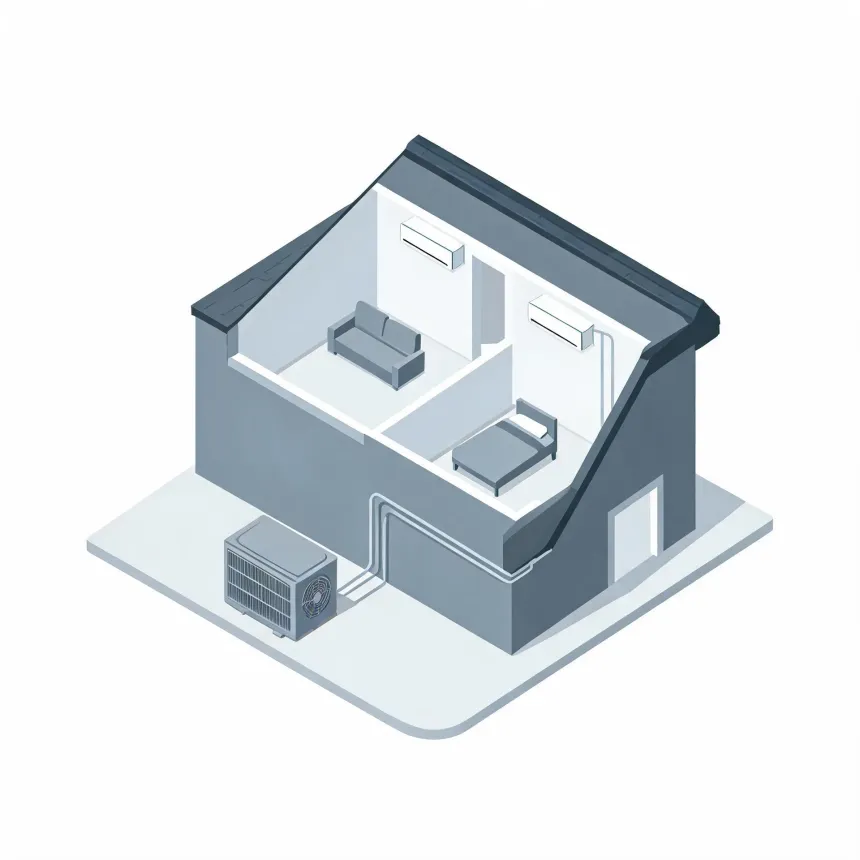
- A single outdoor unit can run one indoor head or several, depending on the system. Multi-zone units are built to support more than one indoor head, each one controlling its own room or area. The right number for your house depends on square footage, layout, and how the rooms are used, which is why a contractor needs to walk the house before recommending a setup.
- Can a mini split heat a whole house?
- Yes, if it's sized and placed for that. A mini split is a heat pump, so it moves heat instead of burning fuel for it, and it works as the main heat source in plenty of homes. With winter lows here averaging around 50°F, the heating load is light compared to colder climates, which makes a mini split a reasonable way to cover the whole house. Getting full coverage takes enough indoor heads placed in the right rooms, so a contractor should lay out the system room by room rather than guess at it.