
HVAC Installation in Fort Lauderdale, FL
Tell us about the house, and a licensed contractor who covers Broward County will get in touch.
Tell us about the job
It takes about a minute.

Your system runs every month of the year here
In Fort Lauderdale, cooling is not a summer job. Afternoons average 91°F and the air conditioner needs to answer for it twelve months straight. There is no winter break to inspect or rest on. Any new system has to be sized and installed to run that kind of duty year round without wearing out early.
Winter nights average 58°F, mild enough that most homes here get by without a real heating season. But the load never really lets up, and the power doesn't always stay on to carry it. Over the last ten years this area has seen 81 damaging wind events, and in 2024 alone, 38% of Florida households lost power for 24 hours or more. A new install is worth doing right the first time, since the system won't get a quiet season to make up for a bad one.
- 58°F
- the average winter night it heats against
- 91°F
- the average summer afternoon it cools against
Florida requires HVAC contractors to hold a state license.
Florida licenses HVAC contractors through the Construction Industry Licensing Board. That means the board tested the contractor and keeps a record of them before they can take on work like this. The license covers the contractor, not each individual job, so it applies across every installation they do rather than being issued job by job.
For this installation, the license tells you the person doing the work was vetted by the state. What covers the installation itself is the permit. In most cities and counties, putting in a new furnace, air conditioner or heat pump needs a permit from the local building office, and the work gets an inspection once it is done.
Sources: Florida Legislature · Florida Department of Business and Professional Regulation
- When should I replace my HVAC system?
- Once your air conditioner is past 10 years old and starts needing repairs more than once a season, replacement usually makes more sense than fixing it again. In Fort Lauderdale your air conditioner runs all year, so it puts on more hours than the same unit would somewhere with a real winter. Rising energy bills, uneven cooling room to room, and a system that runs constantly without keeping up are all signs the compressor or coil is wearing out rather than just needing a minor fix. A contractor can check the refrigerant, the compressor, and the ductwork to tell you whether repair still makes sense for your system.
- Should I replace my furnace and air conditioner at the same time?
- Most homes here do not have a furnace at all, since heat is barely needed and 90.6% of homes that do have heat use electric systems rather than gas furnaces. If your home has a heat pump instead, that single unit handles both heating and cooling, so replacing it means replacing both functions together. When a home does have a separate air handler or electric heat strip alongside the air conditioner, a contractor can tell you whether the two need to go at once or whether the air conditioner alone is the failing part.
- What happens during an HVAC installation?
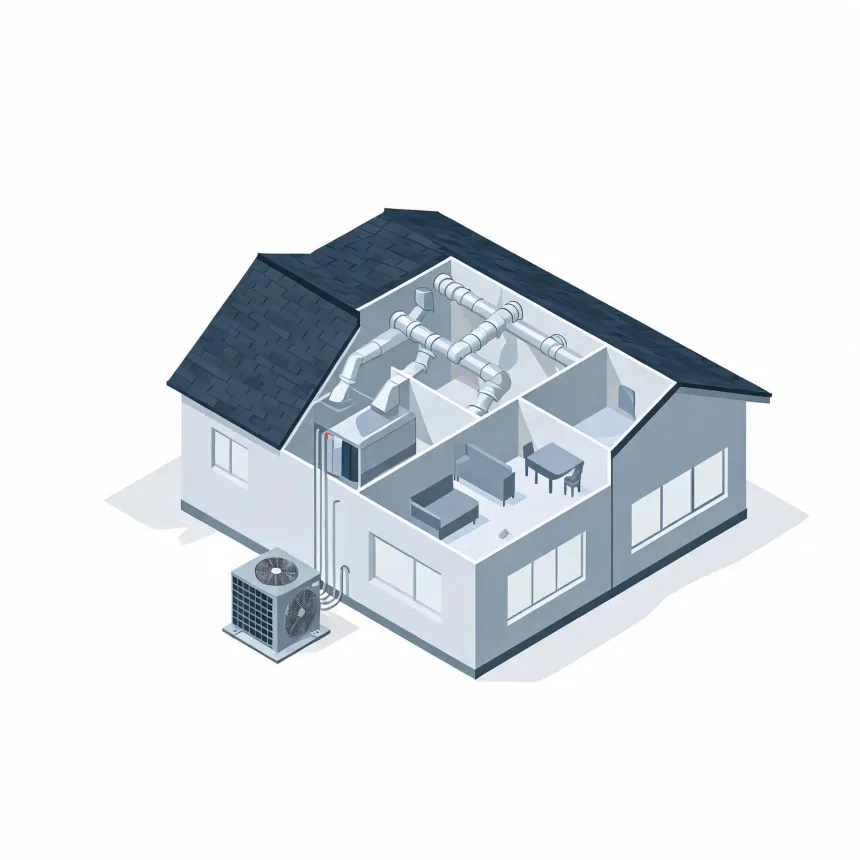
- A contractor removes the old equipment, checks or replaces the line set and ductwork, then sets the new outdoor unit and indoor coil or air handler in place. They connect the refrigerant lines, wiring, and condensate drain, then pressure test the system to check for leaks before adding refrigerant. Once it's running, they check airflow at the vents, set the thermostat, and confirm the system reaches the temperature it's set to. Given how often storms roll through this area, with 81 damaging wind events recorded here over the past ten years, it's worth asking the contractor how the outdoor unit will be secured against wind.