Heat Pump Installation in Lakeland, FL
A new system here will heat from January through January and cool from February through November every year. Tell us about the house, and a licensed contractor who covers Polk County will get in touch.
Tell us about the job
It takes about a minute.
In Lakeland, your heat pump works almost all year
Homes here need cooling from February through November, ten months a year. Heat is only needed in January, and even then, nights average 51°F. That is a mild winter by any measure, and it is why a heat pump suits this place. It rarely has to work hard against cold, so most of its year is spent doing the opposite job, moving heat out of the house instead of into it.
A split-system heat pump built on or after January 1, 2023 has to meet 14.3 SEER2 for cooling and 7.5 HSPF2 for heating. With summer afternoons averaging 92°F and ten months of cooling to get through, that cooling number is the one doing most of the work in a Lakeland home.
- 1 months
- January through January, your system heats
- 10 months
- February through November, it cools
- 51°F
- the average winter night it heats against
- 92°F
- the average summer afternoon it cools against
NOAA nClimDiv, 1991–2020 normals
Florida requires HVAC contractors to hold a state license.
The state license comes from the Construction Industry Licensing Board, and it covers the contractor, not the individual job. That means the board has tested this contractor and keeps a record of them, but it does not sign off on what happens at your house.
For a heat pump installation, the license tells you the person doing the work is qualified to do it. Whether it was done right at your address is a separate question, and in most cities and counties that answer comes from a permit and inspection through the local building office, done after the work is finished.
Sources: Florida Legislature · Florida Department of Business and Professional Regulation
- Is a heat pump better than a furnace?
- For Lakeland, yes, because a heat pump handles both sides of the year. Homes here need cooling for 10 months and heat for really just a few cold snaps in January, so one system that does both makes more sense than a furnace that only handles the short winter. A furnace also needs a separate air conditioner to cover the other 10 months, which is two systems to maintain instead of one. Where winters get genuinely cold for months at a stretch, a furnace can make more sense, but that is not this climate.
- What's the difference between a heat pump and an air conditioner?
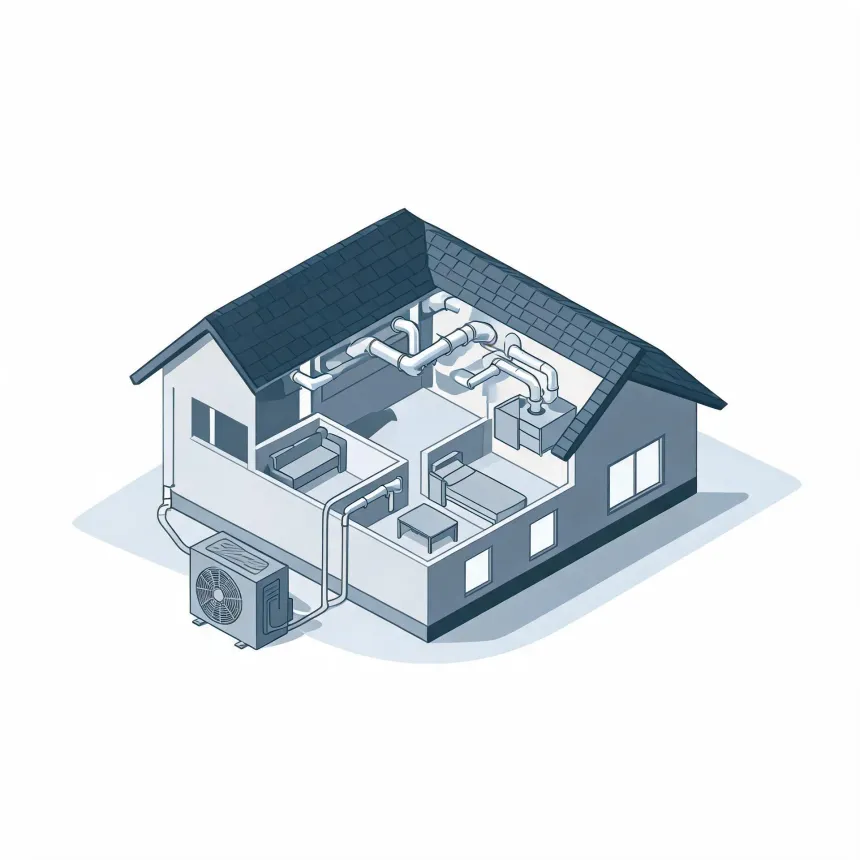
- An air conditioner only moves heat out of your house. A heat pump does that too, but it can also run in reverse and move heat into your house, which is what heats your home in winter instead of a furnace burning gas or running electric strip heat. Mechanically the two share the same basic parts, the compressor, the coils, the refrigerant. The heat pump just has a reversing valve that lets it switch directions.
- Does a heat pump work in cold weather?
- Yes. A heat pump pulls heat from outside air even when that air feels cold, because there is still heat energy in air down to well below freezing. In Lakeland this barely matters since winter nights average 51°F, which is well within the range a heat pump handles easily without help from backup heat. Heat pumps lose efficiency as the outdoor temperature drops much further than that, but that kind of cold is not what this area sees.