
HVAC Installation in Sanford, FL
A new system here will heat from December through January and cool from March through November every year. Tell us about the house, and a licensed contractor who covers Seminole County will get in touch.
Tell us about the job
It takes about a minute.

In Seminole County, your air conditioner does almost all the work
Cooling runs March through November here, nine months of the year, with summer afternoons averaging 92°F. Winter only asks for heat in December and January, and even then nights average 51°F. A new system has to be sized for the season that actually shows up, not for a cold snap that rarely does.
Most homes here heat with electricity, so the outdoor unit carries the load almost all year. Seminole County has seen 30 damaging wind events over the past ten years, and in 2024, 38% of Florida households lost power for at least a day. Whatever gets installed needs to hold up outside and come back on by itself once the power does.
- 2 months
- December through January, your system heats
- 9 months
- March through November, it cools
- 51°F
- the average winter night it heats against
- 92°F
- the average summer afternoon it cools against
NOAA nClimDiv, 1991–2020 normals
Florida requires HVAC contractors to hold a state license.
The Construction Industry Licensing Board tests contractors and keeps their records on file, and the license belongs to the contractor, not to any single job. That means the same license has to stand behind every install a contractor does in this state, not just the one on your property.
For a heating and cooling install in Seminole County, that license is what stands behind the person doing the work. Beyond that, most cities and counties require a permit from the local building office for this kind of job, along with an inspection once it's finished. That inspection is what checks the installation itself, separate from whatever the license already covers.
Sources: Florida Legislature · Florida Department of Business and Professional Regulation
- When should I replace my HVAC system?
- Replace it when repairs stop making sense or the system can't keep up anymore. If your air conditioner is breaking down more than once a season, a contractor is going to keep charging you for parts on a system that's on its way out. Age matters too, and an older system working nine months of cooling a year here has a lot of hours on it. If the next repair is a major one, like a compressor, that's usually the point to stop and replace instead.
- Should I replace my furnace and air conditioner at the same time?
- If they're close in age, yes, it's worth doing together. Homes here only need heat for about two months out of the year, so a furnace can last a long time without much strain on it. But if your air conditioner is failing and the furnace shares the same air handler or ductwork, a contractor can tell you whether replacing just one will leave the other mismatched. Ask for that assessment before you decide, since it depends on what's actually installed in your home.
- What happens during an HVAC installation?
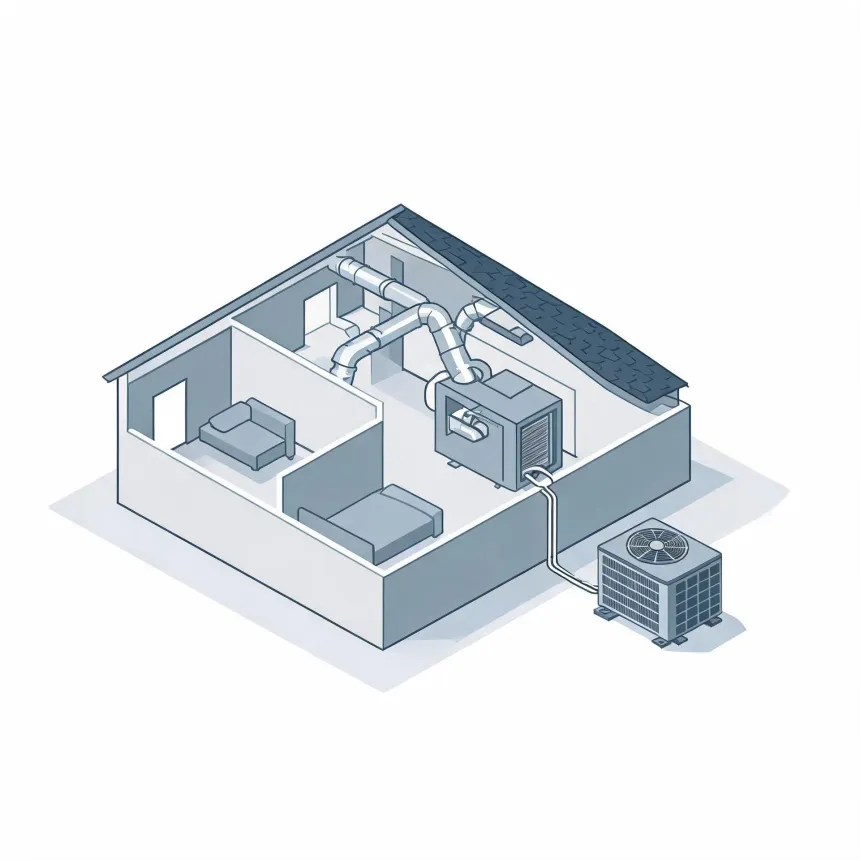
- A contractor removes the old equipment, sets the new unit, and connects it to your ductwork, refrigerant lines, and electrical or gas supply. They'll also check that the ducts and vents are sized right for the new system, since a system that doesn't match the ductwork won't heat or cool evenly. Once it's running, they test it and check the refrigerant charge and airflow before they leave. Florida requires the contractor doing this work to hold a state license, so ask to see it before work starts.