How often to clean a dryer vent in Orlando, FL

Get matched with a pro who works on dryer vents in Orange County.

Request a pro

Once a year is the rule for a dryer vent in Orlando, and in most homes that's often enough to matter. Lint builds up along the duct every time you run a load, and a clogged vent forces the dryer to run longer and hotter to get clothes dry. In a house that runs the dryer on humid days most of the year, that buildup can happen faster than it would somewhere drier, since clothes often come out of the washer heavier with moisture here. A vent that's choked also pushes heat and damp lint back into the laundry room instead of outside. If your dryer takes two cycles to dry a load that used to take one, or the top of the dryer feels hot to the touch, the vent is overdue regardless of the calendar.

What does your household mean for your dryer vent?

  • 2.72 people per household on average

    Orange County households run 2.72 people on average, and more people means more laundry loads moving through that vent every week.

  • Half the homes here were built by 1994

    Half the homes in Orange County were built in 1994 or earlier, which means the ductwork behind the wall has had decades to collect lint if it's never been cleaned.

  • Power here costs 16.02 cents per kilowatt-hour

    At 16.02 cents per kilowatt-hour, a dryer working harder to push air through a clogged vent shows up on your power bill.

ACS 2020-2024 · EIA-861 2025

A household that does a load or two a week

If it's just one or two people, or laundry only happens a few times a week, lint has less chance to pile up between cleanings. Once a year on the usual schedule is probably enough. You can still check the vent hood outside the house now and then. If air comes out strong when the dryer runs, the duct is doing its job. A light load keeps the whole system working the way it was built to, and you likely won't see trouble show up between cleanings.


A full house running laundry daily

A bigger household, or one with kids, pets, or towels and sheets running through the dryer most days, pushes far more lint through that duct than a once-a-year cleaning expects. Lint can build up faster than the schedule accounts for, and a dryer working against a partly blocked vent runs hotter and longer every single time. If you're noticing clothes taking longer to dry, or the top of the dryer feels warm to the touch, the vent may need attention sooner than the one-year mark.

A white hooded dryer vent mounted on light-colored lap siding above a concrete foundation, with lint clogging its opening.
Before you get your dryer vent cleaning
A stainless steel hooded dryer vent with four corner screws mounted on white horizontal lap siding above a gray concrete foundation.
After you get your dryer vent cleaning

A dryer vent doesn't clog evenly. Lint catches where the airflow slows down, mainly at elbows and bends, so a duct with several turns fills up faster than a straight run to the outside. The lint trap in the dryer itself only grabs part of what comes off a load. The rest travels down the duct on the exhaust air, and where it lands depends on what kind of duct you have. Smooth rigid metal pipe gives lint less to grab onto. Vinyl or foil accordion ducting has ridges that catch it much more easily, which is why that kind of duct tends to need attention sooner. At the end of the run, the vent hood outside has a flap that's supposed to open when the dryer runs and close the rest of the time. That flap can get blocked by nearby shrubs or a fence, even when the duct behind it is completely clear, so a vent that seems to be struggling isn't always a lint problem at all.

Where Lint Actually Collects

  • Lint doesn't collect evenly along the duct, it builds up fastest at every elbow and bend where airflow slows down.
  • A rigid metal duct run with few turns can go longer between cleanings than a long run full of elbows.
  • The dryer's lint trap only catches a fraction of what comes off a load, the rest rides the exhaust air into the duct.
  • Vinyl or foil accordion ducting traps lint in its ridges far more than smooth rigid pipe does.
  • The outside vent hood has a flap that should swing open when the dryer runs and seal shut when it's off.
  • A vent that exits near shrubs or a fence line can get the flap blocked from outside even when the duct itself is clear.
A white hooded exterior vent cover with a mesh screen mounted on gray lap siding above a concrete foundation.
The vent cap sits flush against the siding and the flap moves freely, which means air is actually getting outside when the dryer runs.
A white plastic hooded dryer vent mounted on beige lap siding, with gray lint clogging its louvered opening and hanging below it.
Lint has packed the opening and the flap can't close all the way, so the dryer is pushing hot, damp air back toward the house instead of out of it.
A woman in a cream cowl-neck sweater stands in a lamp-lit room looking out a window at a snow-covered yard with shrubs and bare trees at dusk.
A woman in a gray turtleneck sweater stands near a large window in a lamp-lit living room, looking out at falling snow and snow-covered conifers.
A woman in a chunky knit sweater stands by a large window looking out at snow-covered ground, with a dimly lit living room containing a gray sofa, framed artwork, shelves and table lamps behind her.
A woman in a gray turtleneck sweater stands in a dimly lit living room with a lamp and bookshelves, looking out a multi-pane window at falling snow.

Get matched with a dryer vent pro in Orange County

Skip searching for someone who cleans dryer vents in Orange County.

No fee to send it, and nothing to sign.

Signs Your Vent Needs Attention

  • A dryer that takes two or three cycles to dry one load is pushing air against a partial clog somewhere in the duct.
  • Humid air inside the laundry room after a cycle usually means the vent isn't carrying moisture outside like it should.
  • A burning smell near the dryer is lint reacting to heat it shouldn't be sitting next to.
  • The outside wall near the vent cap running warmer than the rest of the siding points to trapped heat in the duct.
  • A higher power bill with no other change in how you do laundry can trace back to a dryer working harder than it needs to.
  • Clothes that come out hot to the touch but still damp are a sign the vent isn't moving air the way it did when the house was new.

Your dryer tells you when the vent is falling behind, if you know what to watch for. Start with time. If a load that used to take forty minutes now needs an extra cycle, something is slowing the air down, and a partial clog in the duct is the usual reason. Walk into the laundry room right after a cycle ends. It should feel close to how it felt before you started. If it's noticeably warmer or more humid, that moisture is supposed to be going outside through the vent, not staying in your house. Lint sitting against a hot duct can produce a burning smell, faint at first, more noticeable as the load goes on. Outside, the wall around the vent cap can run warmer than the siding next to it, which means heat is building up in the duct instead of escaping. None of these are dramatic on their own. A higher power bill with no change in your laundry habits is another quiet sign, since a dryer fighting a clogged vent runs longer and pulls more power to finish the same load. And if clothes come out of the dryer hot but still damp, the machine is doing its job while the vent fails to do its. Catch two or three of these together and the vent is overdue, whatever the calendar says.

2.72 people per household on average

With close to three people in most Orange County households, that vent is handling laundry for a full family most weeks, not just the odd load. More people in the house means more loads through the dryer, and more chances for lint to build up before the next cleaning.

ACS 2020-2024

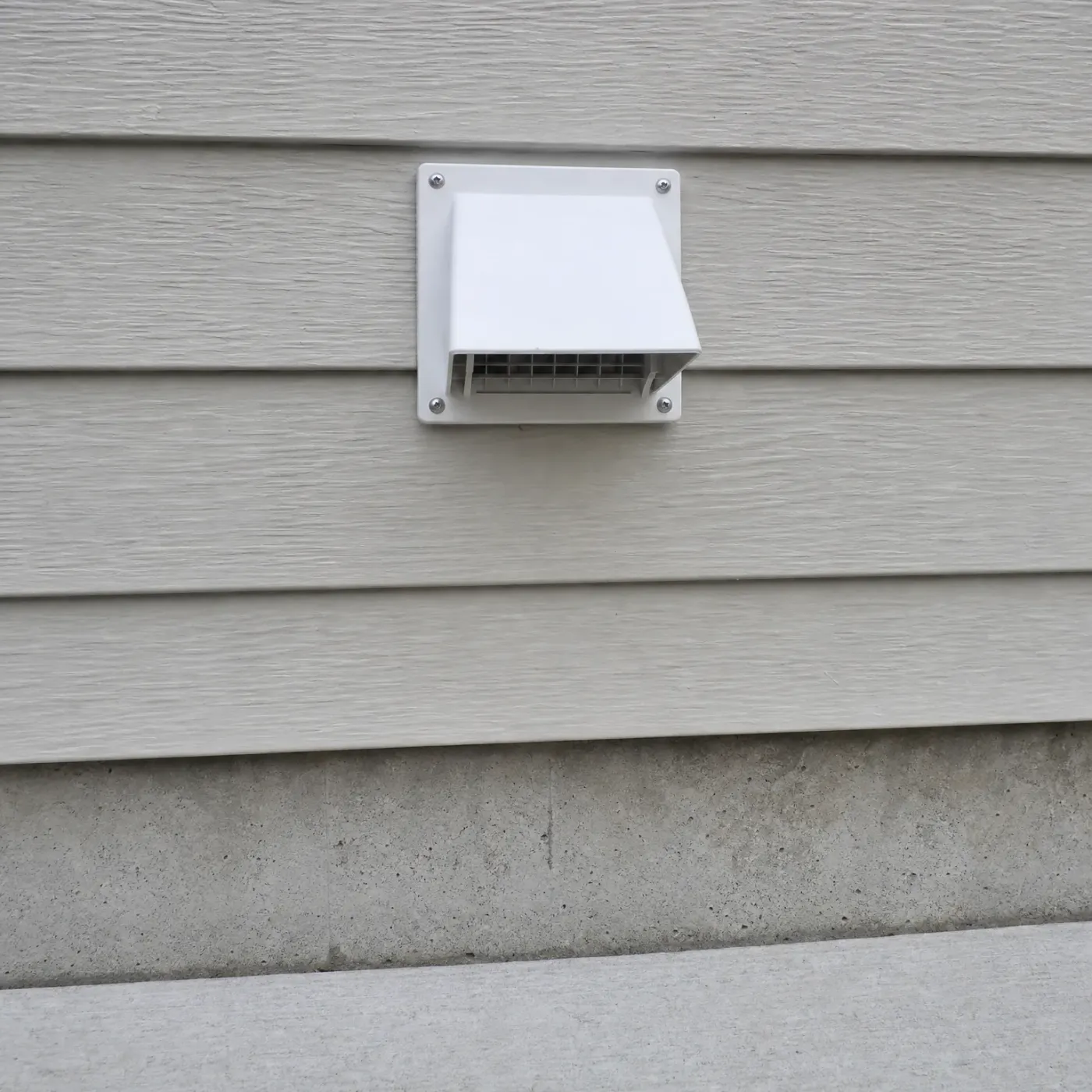
A white hooded dryer vent with a louvered opening mounted on light gray horizontal lap siding above a concrete foundation.

The vent cap sitting flush

This cap sits tight against the siding and the louvers swing open when the dryer kicks on. Air and moisture push straight out. Nothing around the opening shows dust or buildup, which is what a clear duct looks like from the outside.

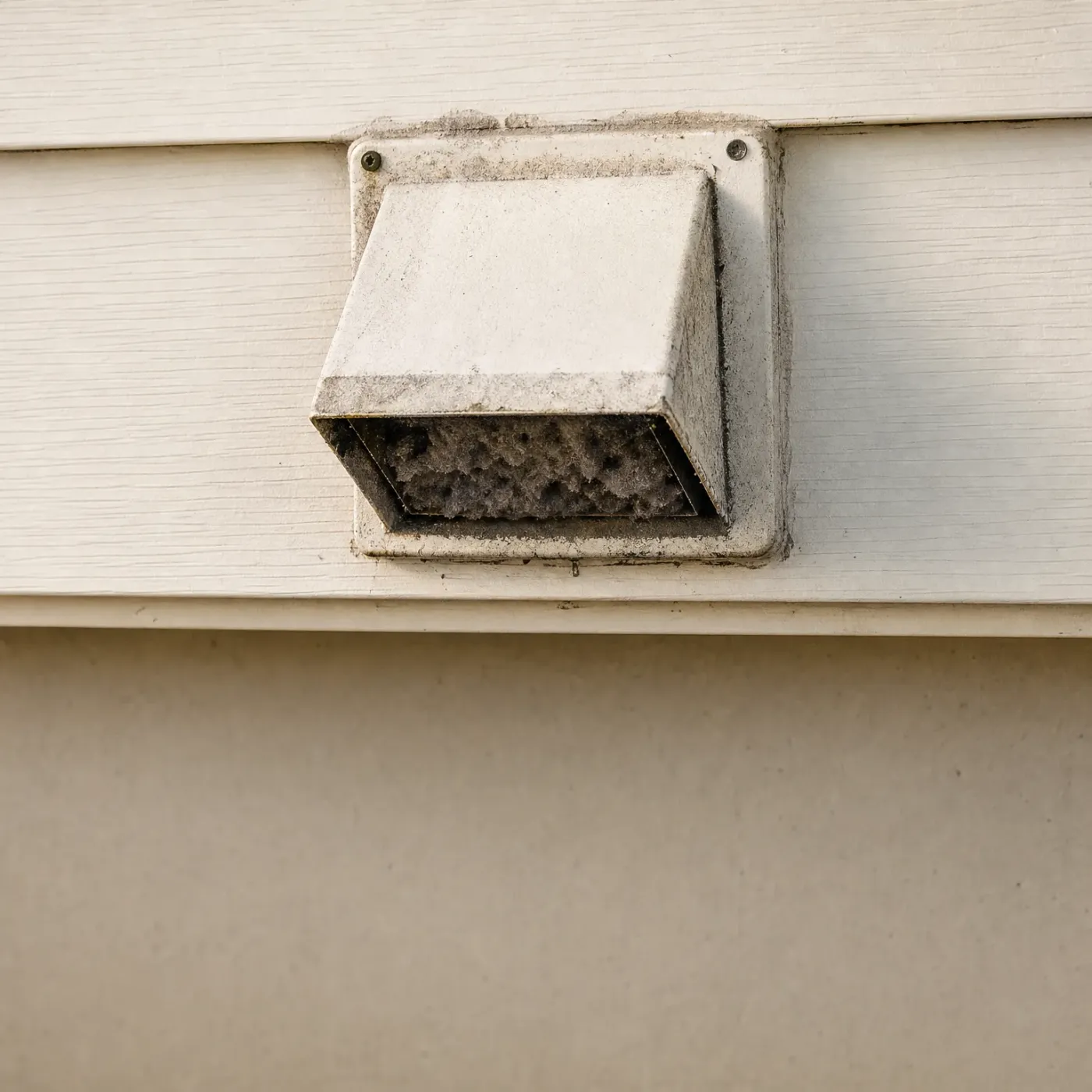
A white plastic hood-style dryer vent mounted on beige horizontal siding, with its opening clogged by thick gray lint.

The vent cap packed with lint

This opening is choked with lint and the flap can't swing shut anymore. Dust has settled into the siding around it. Air from the dryer isn't making it outside, it's backing up somewhere in the duct behind this cap.

A woman in a gray sweater and jeans stands in an open wood front door of a white stucco house while a man in a dark jacket walks toward her on the entry path.

Once a year, on schedule, for most Orlando homes

A dryer vent in Orlando needs cleaning about once a year. That's true for most households in Orange County, and the signs along the way, longer dry times, a hot laundry room, lint at the vent cap, tell you if your house needs it sooner. You've read what shapes that schedule for your home: how many loads go through the dryer, how long and bent the duct run is, what the vent hood looks like from outside.

Checking that vent, or figuring out if this year is the year, isn't something you have to sort out alone. Finding someone qualified to look at your specific setup, the duct length, the elbows, the vent cap on your house, usually means calling around and explaining the same thing more than once. A contractor who handles dryer vent cleaning in Orange County can look at what you've got and tell you where you actually stand.

A large weathered ceramic vase and a shallow wooden bowl sit on a rustic wooden table beside a window with linen curtains, with a blurred sofa with cushions and a hanging fabric panel in the background.
A shingled two-story house with lit windows and stone accents at dusk, with a stone paver walkway and landscape lighting leading past ornamental grasses toward a calm bay under an orange and blue sky.

Dryer Vent Cleaning

Find a dryer vent cleaning pro in Orange County

Duct and vent cleaningOrange County, FL
Step 1 of 3

What kind of equipment?

  • A ceramic vase holding leafy green branches and a shallow wooden bowl sit on a wooden window ledge beside a sunlit window, with a cream upholstered chair and knit throw in the foreground.
    • Get matched with an Orange County pro who cleans dryer vents.
    • Describe your dryer vent job, and a local pro who handles it gets in touch.
  • Sunlit living room corner with a beige upholstered sofa, a round wooden side table holding a ceramic vase of olive branches, linen curtains at a window, a floor vent in the baseboard, and a woven jute rug on hardwood flooring.
    • One request and the dryer vent cleaning stops waiting on you.
    • After you send the request, you're done searching.
  • A wooden side table with a single drawer holds a shallow carved wood bowl and a white ceramic vase of green eucalyptus stems, beside a window and an upholstered chair draped with a cream knit throw.
    • One form replaces the calls you'd make to find a dryer vent pro.
    • Answer a few questions about the dryer vent cleaning and skip the search.
  • Corner of a house with horizontal siding, a white-framed window and stone veneer base, beside a covered entry with wooden steps, a potted plant, mulched beds of green shrubs and a flagstone path.
    • The pro who gets in touch is licensed in Florida and works in Orange County.
    • A licensed pro who works in Orange County gets your request.