Heat Pump Repair in St. Augustine, FL
Homes here need heat from December through February and cooling from April through October. If your system quits, tell us what it's doing and a licensed contractor who covers St. Johns County will get in touch.
Tell us about the job
It takes about a minute.
Ten months of run time wears on a heat pump here
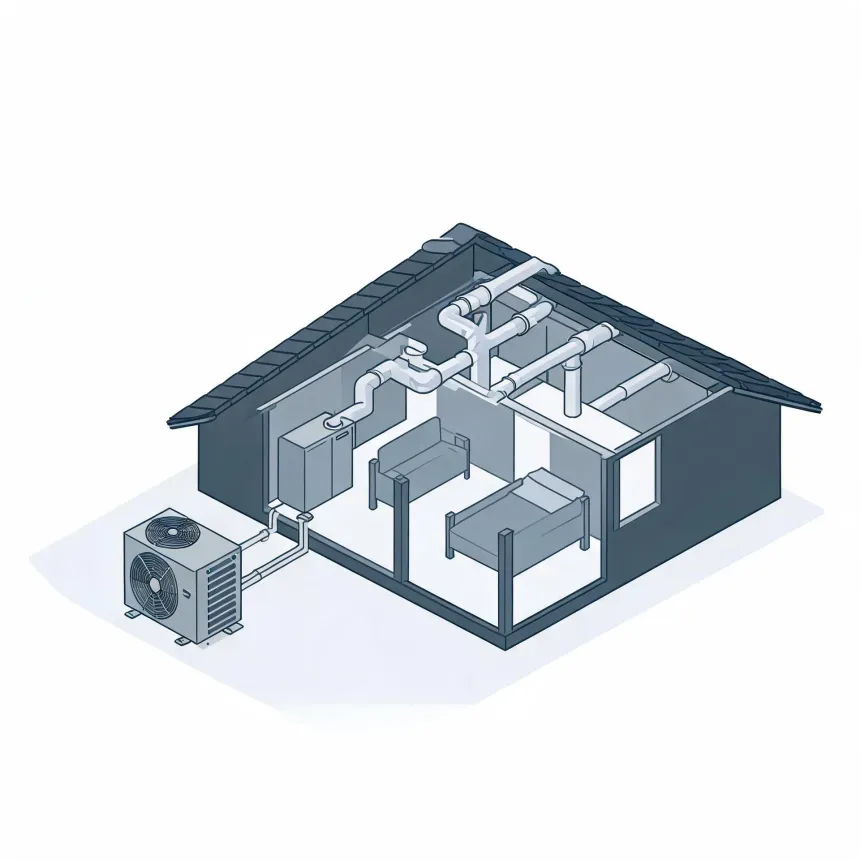
Your heat pump works most of the year in St. Johns County. Summer afternoons average 90°F, so it runs long hours to keep the house cool from April through October. Then it switches over and pulls heat out of 48°F air on winter nights from December through February. Ten months of the year, one machine is carrying the load in one direction or the other.
That much run time wears on the reversing valve, the part that switches the system between cooling and heat, and on the outdoor fan motor that runs through the heat of the day. Storms add to it. St. Johns County has logged 127 damaging wind events over the past ten years, and statewide, 38% of households lost power for at least 24 hours in 2024. A hard power cut while the system is running can trip it offline or damage the board that controls it, and you will notice the air stops changing temperature at all, in either direction.
- 3 months
- December through February, your system heats
- 7 months
- April through October, it cools
- 48°F
- the average winter night it heats against
- 90°F
- the average summer afternoon it cools against
NOAA nClimDiv, 1991–2020 normals
Florida requires HVAC contractors to hold a state license.
That license is issued to the contractor, not to the job, so it stays with the business across every heat pump they touch rather than getting renewed or checked per repair. The Construction Industry Licensing Board is the body that tested them and keeps that record on file for the state.
A heat pump repair almost always means working on the refrigerant side, the coils and lines that move refrigerant through the system. Whoever opens that side of your unit has to hold EPA Section 608 certification, a federal requirement that applies no matter which state the work happens in. In Florida that certification sits alongside the state license rather than replacing it, so the same contractor working on your heat pump answers to both.
Sources: Florida Legislature · Florida Department of Business and Professional Regulation
- Why is my heat pump blowing cold air?
- In heating mode, a heat pump blows air that feels cool next to your skin even when it is working right, because the air coming out is warmer than the room but still cooler than your body. If the air is actually cold, check that the thermostat is set to heat and not fan only, since fan only just circulates room air without running the system. It could also be stuck in defrost mode longer than it should, or the reversing valve that switches it between heating and cooling could be stuck partway. A contractor can test the reversing valve and check the refrigerant charge to find out which it is.
- Why is there ice on my heat pump?
- A heat pump forms a light layer of frost during normal defrost cycles in winter, especially on cold nights, and that frost clears on its own every hour or so when the unit reverses briefly to melt it. Ice that stays on the coil or builds up thick usually means airflow is restricted, often from a dirty filter or a blocked outdoor coil, or the refrigerant charge is low. Low refrigerant lets the coil run too cold, and once ice covers the coil the airflow gets worse and the ice keeps building. Shut the system off if you see heavy ice, let it thaw, and have a contractor check the charge and airflow before running it again.
- Why is my heat pump running but not cooling?
- If the outdoor unit and indoor blower are both running but the air is not cold, the most common causes are a dirty air filter blocking airflow, a frozen outdoor or indoor coil, or a refrigerant leak. A clogged filter starves the system of airflow and can bring cooling to a near stop even though everything is turning on. Low refrigerant from a leak will also stop the system from cooling well, and it will not refill itself, so the level only drops further over time. A contractor can check the filter, look for ice on the coils, and test the refrigerant charge to find the cause.