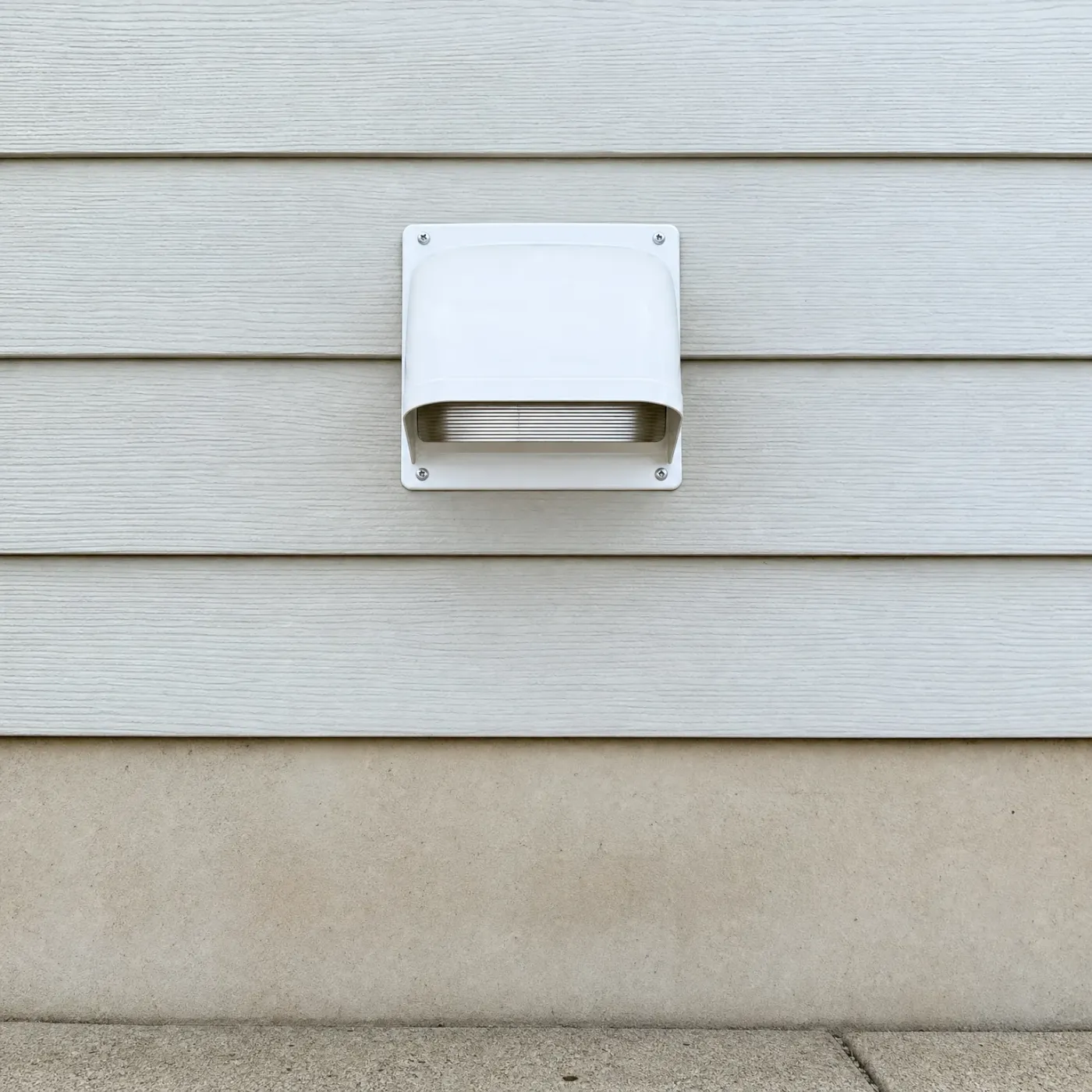
Vent clear
This is what a clean line looks like. The louvers hang open and move with the air, and the cap sheds lint instead of holding it. Air leaves the house as fast as the dryer pushes it out, so a load of towels finishes in one cycle.
A dryer that runs two or three cycles to finish a load is almost always short on airflow, not heat. Lint builds up inside the vent line itself, and in Miami-Dade the air moving through that line is already carrying more moisture than it would up north, so the dryer has to push harder just to get a load dry on a normal day. When the vent is partly blocked, the moist air has nowhere to go and it sits in the drum instead of leaving the house, so the clothes come out damp and still warm instead of dry. This gets worse over time, not better, because every load leaves a little more lint behind. Left alone, it also means the dryer runs hotter and longer than it should, which wears on the heating element and the motor. A clear vent line is what lets the dryer do a full cycle in one pass again.
2.76 people per household on average
Your home runs close to 3 people's worth of laundry on average here, so the vent is clearing lint more often and a weak spot in the line shows up sooner.
Half the homes here were built by 1980
Half the homes in the county were built by 1980, and a vent line that old has had decades to pick up bends, sags, or a crushed section that slows the air down.
Power here costs 14.55 cents per kilowatt-hour
At 14.55 cents per kilowatt-hour, a dryer running two or three extra cycles to finish a load is burning power that a clear vent would not need.
ACS 2020-2024 · EIA-861 2025
A dryer doesn't dry with heat alone. It dries by pushing a steady column of hot, wet air out of the drum and out of the house, and pulling in fresh air behind it. The vent line is the only way that air leaves. It isn't a chamber for lint to sit in, it's a path, and anything that slows the air down turns part of that path into a collection point. That's why the first place lint builds up usually isn't at the hood outside, it's at the first elbow or bend the duct makes, because the air slows down there and drops what it's carrying, the same way a stream drops sediment where it curves. A dryer running clean finishes a load in one cycle because the air moving through it has somewhere to go. Run two or three cycles for the same load and the motor and heater are working fine, the air just isn't getting out the other end fast enough. The hood outside has a flap for a reason. It should open wide when the dryer runs and close flat when it stops, keeping rain and pests out between loads. A flap that barely moves, or doesn't close all the way, is telling you something about what's happening further back in the line. The duct material matters too. Rigid metal duct gives air a clear, smooth path. Coiled plastic or foil duct, still behind some older machines, has ridges that catch lint the straight stuff would carry right through.


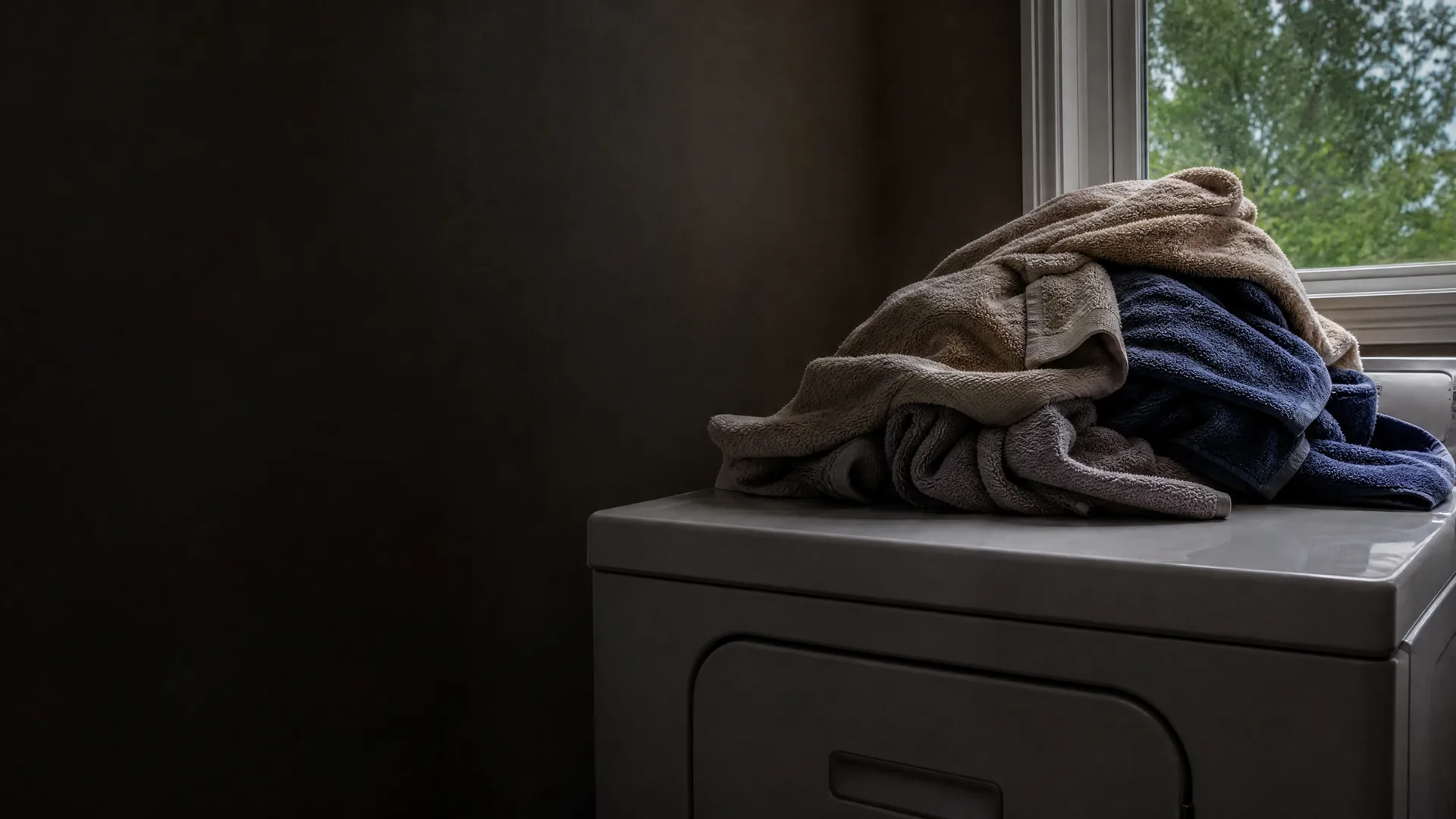
It's past eight on a Tuesday and you're still in the laundry room. The second cycle just ended and the towels on top of the dryer are warm but nowhere near dry, heavy in your hands the way they were an hour ago. The room smells faintly of hot dust. Outside it's still thick and wet the way Miami nights are, and somehow the air in here feels the same. You press start again, because what else is there to do, and head back to whatever you were doing before, already knowing you'll be back in forty minutes checking the same towels.
The pro who gets in touch is licensed in Florida and works in Miami-Dade County.
There's no charge for the request.

The flap on the outside vent hood only opens as wide as the air pushing it. A clear line forces it open fast and holds it there until the cycle ends. A line packed with lint lets it crack open partway, flutter, then drop shut between pulses of air. That stop and start is what stretches a forty minute cycle into two or three, and it's happening outside where you can't see it from the laundry room.

Dryer exhaust is already warm, wet air, and Miami-Dade's outside air is humid most of the year, so there's less of a dry pull helping that exhaust along once it leaves the drum. Lint sitting in a damp vent line picks up moisture and packs down instead of blowing loose the way dry lint would. A line that might clear itself somewhat in a drier climate tends to stay clogged here until someone physically clears it.
You clean the lint trap every load, sometimes every other load, and the dryer still takes two cycles to get a towel dry. It's a fair thing to wonder about, because the trap is the part you can see and touch, so it seems like it should be the whole answer. It isn't. The trap only catches what collects in that one small screen.
The trap screen stops maybe three-quarters of the lint a load throws off. The rest rides the air down the vent line, through every bend, and most of it never makes it outside. It settles at the bends themselves, where the air slows down, and builds up there load after load until the line is narrower than it used to be. Cleaning the trap keeps that one screen clear, but it does nothing for what's collecting six feet further down. In Miami-Dade, with the air already carrying more moisture than it would further north, a line that's even partly blocked leaves a load damp instead of dry, no matter how clean the trap is when you start.
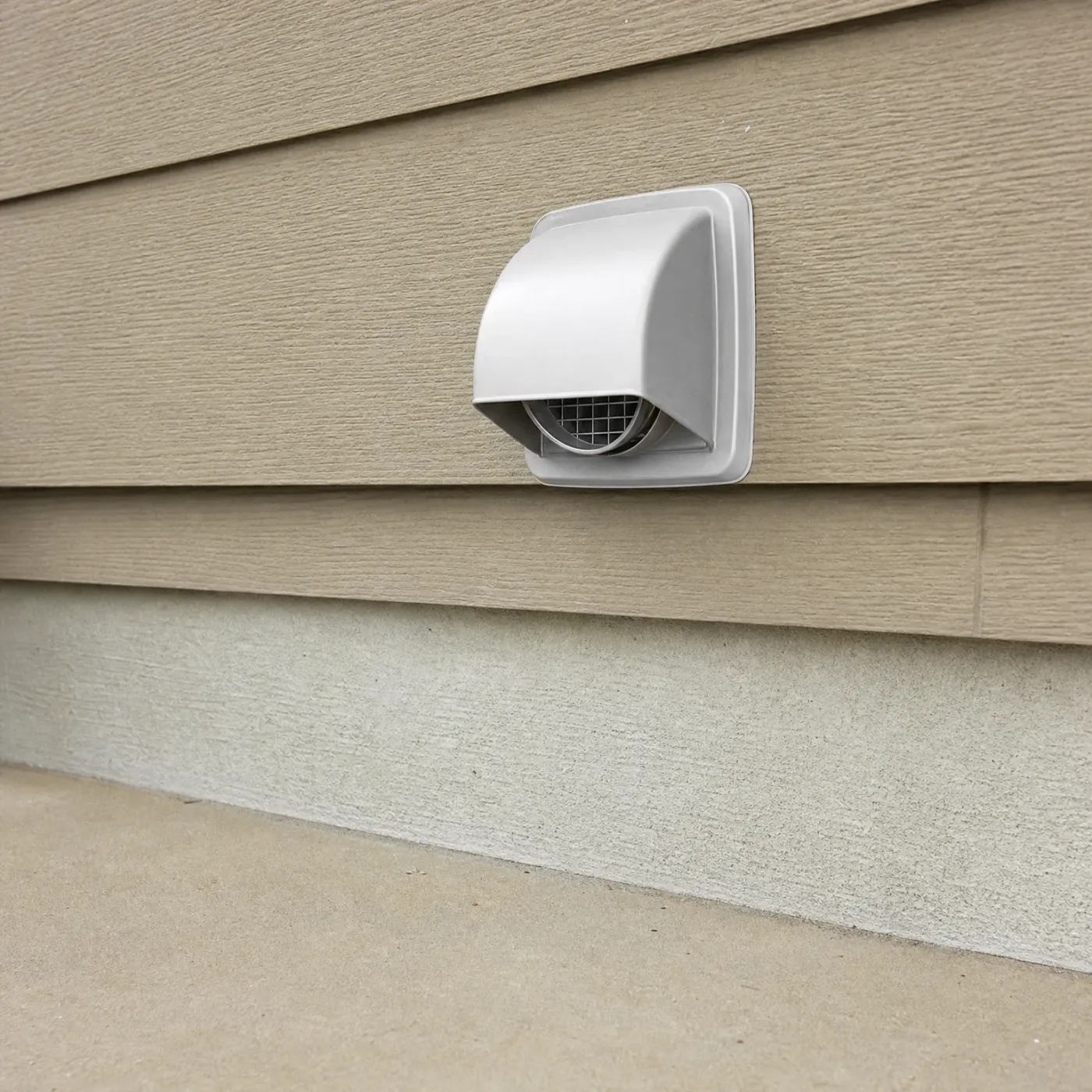
This is what a clean line looks like. The louvers hang open and move with the air, and the cap sheds lint instead of holding it. Air leaves the house as fast as the dryer pushes it out, so a load of towels finishes in one cycle.
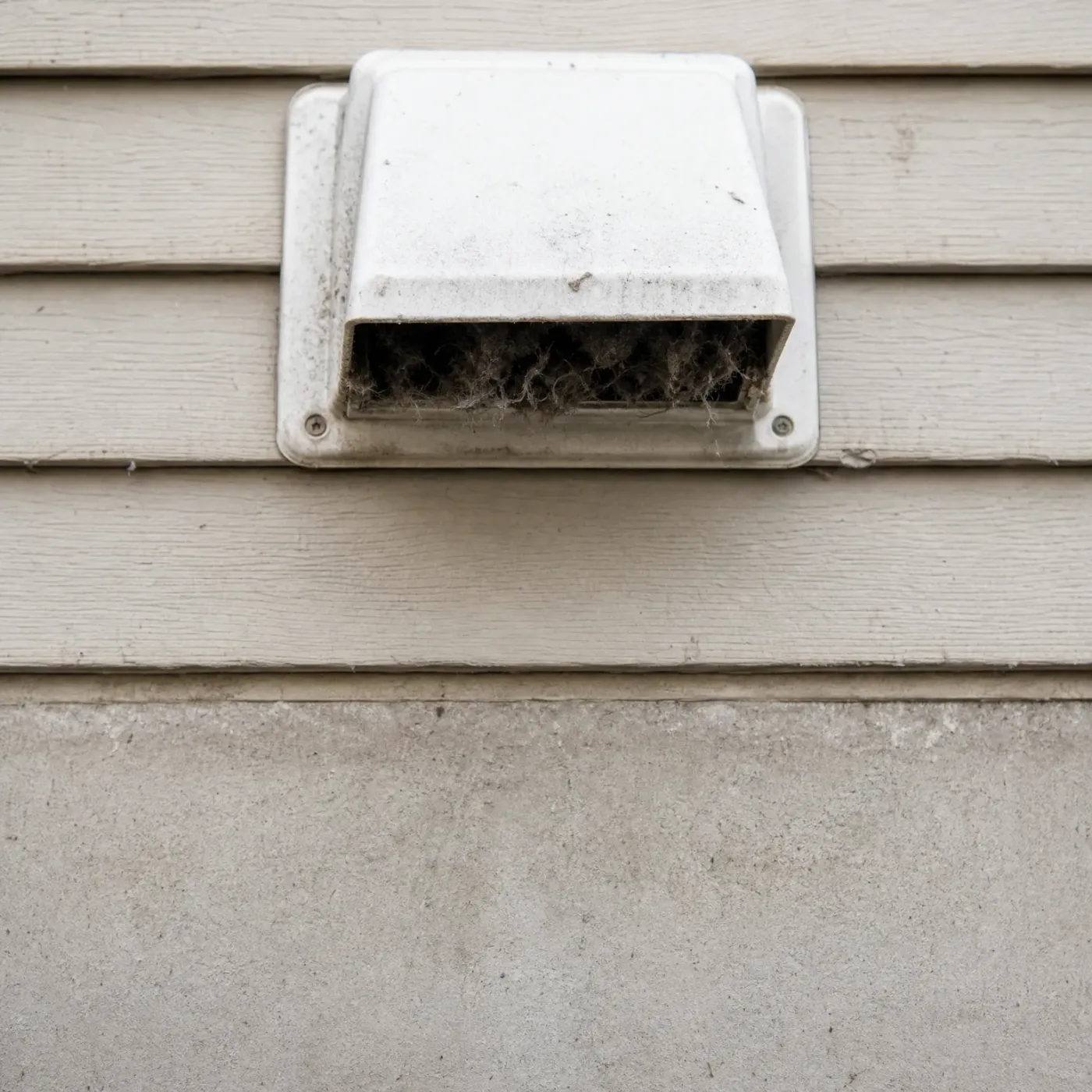
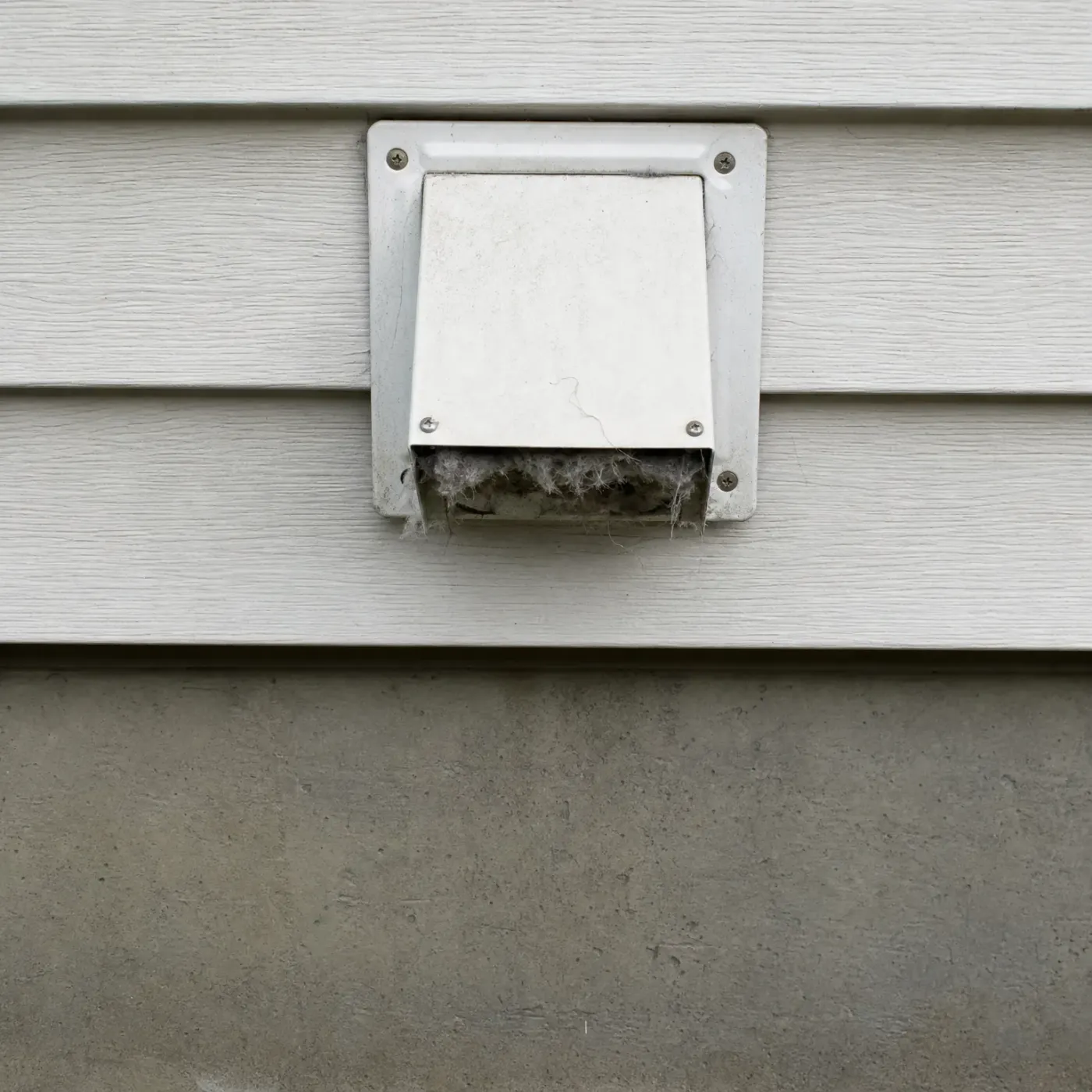
This cap is packed with gray lint across the whole opening. The louvers can't swing open behind it, so exhaust backs up into the line and the drum fills with warm, damp air instead of pushing it outside. That's the two-cycle load.
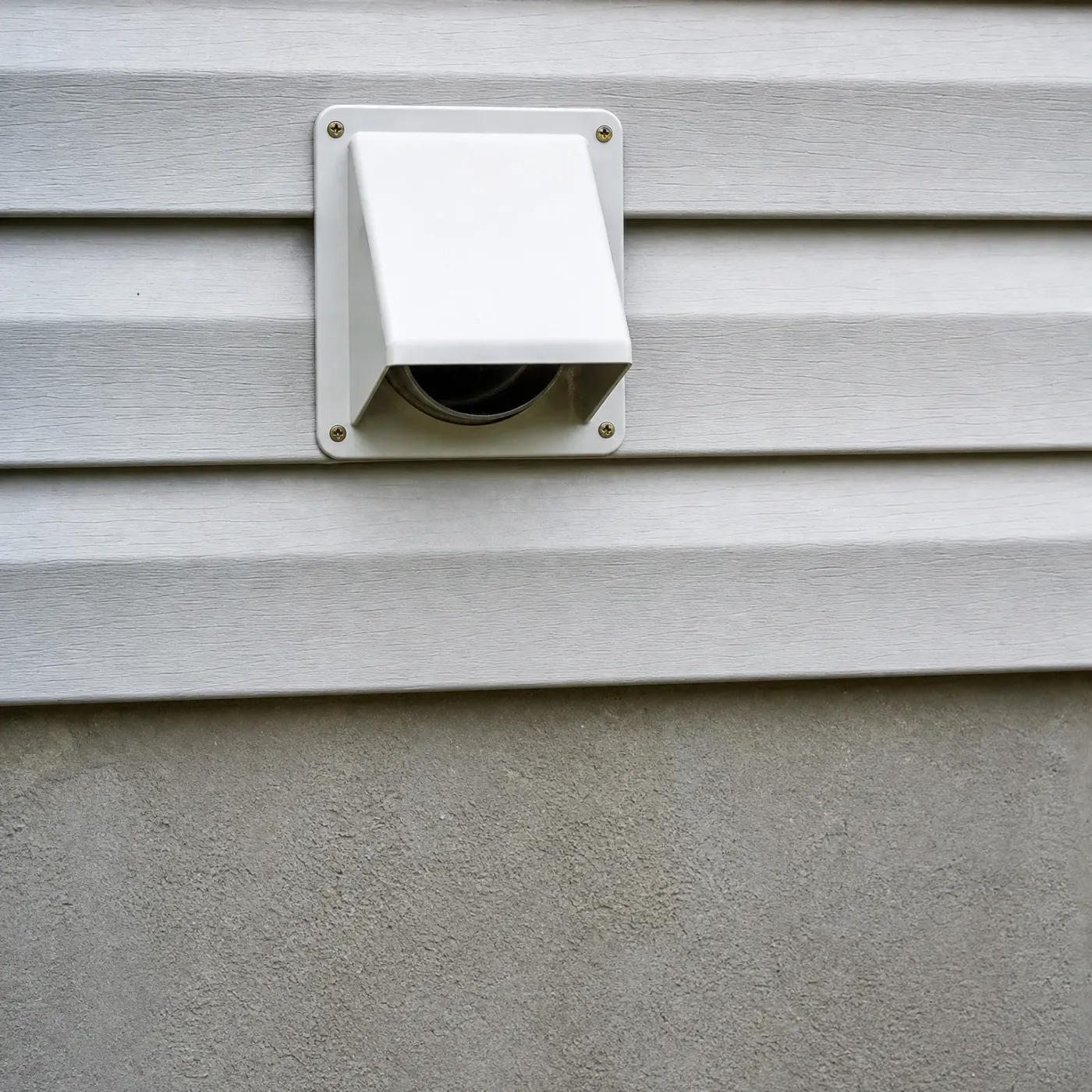
This is what the wall cap looks like when the line behind it is clear. The hood hangs open and the screws holding it are clean, no lint catching on the edges or building up around the opening.
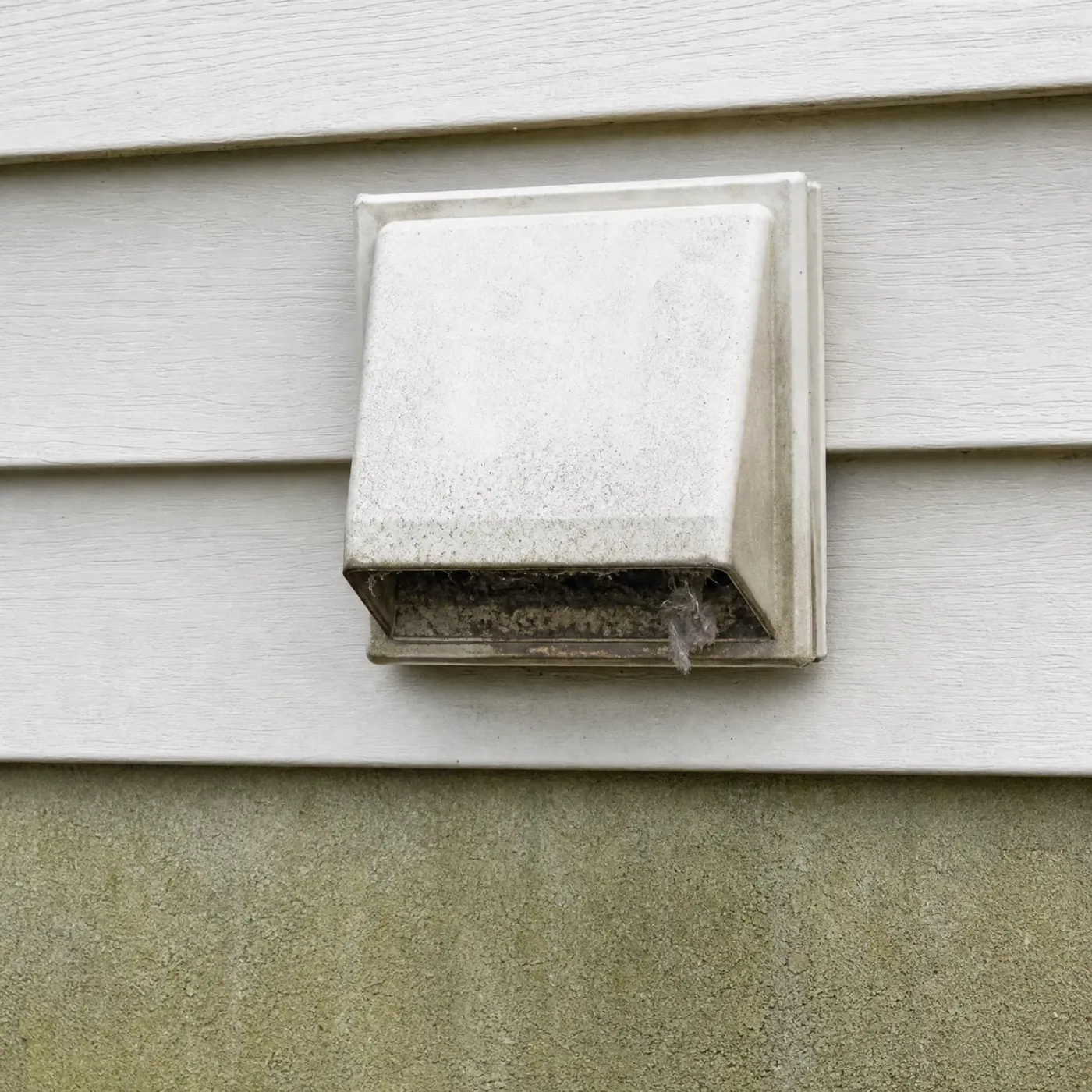
Lint has worked its way to the flap and started hanging out of it. Once it reaches the outside like this, the line behind it is carrying a lot more than this, and the dryer is pushing against most of it.




Hot, moist air leaves the drum and enters the vent line.
Lint in the airstream settles at each bend or seam it passes.
The buildup narrows the path, so air backs up inside the line.
Moisture that should leave with the air stays in the drum instead.
At 2.76 people, your household is doing laundry most days, not once a week. That steady pace keeps pushing lint into the line between cleanings, so a vent that was clear in spring can be slowing your dryer down by late summer.
ACS 2020-2024



That's the whole answer. Lint narrows the line, the line backs up, moisture stays in the drum, and the dryer runs a second or third cycle trying to finish what the first one should have. Clear the line and the flap opens fully again, and the air leaves the house as fast as the dryer pushes it.
You don't have to figure out which contractor to call, sit through several quotes, or explain the same thing twice to get there. One licensed local contractor who works on vent lines like yours all summer takes the call, and that's the one call you make. No flooded inbox, no sorting through strangers. Just someone who already knows what a clogged line in a Miami-Dade house looks like before they get to yours.


No phone calls to make