




Heat pump stuck in heat mode in Florida

RepairHeat PumpFlorida
Step 1 of 2

What ZIP code is the job in?

Why is my heat pump stuck on heat and won't switch to cool?

Florida summers are muggy enough that you notice right away when the air isn't cooling. You set the thermostat to cool, but warm air keeps coming out of the vents, or the system won't respond at all. Catching this now instead of waiting it out can save the unit from working against itself in the heat, so it's worth knowing what's actually going on before the house gets any warmer.

A stuck reversing valve is usually the cause

The reversing valve is what switches a heat pump between heating and cooling by changing the direction refrigerant flows through the system. When it sticks in one position, the thermostat can call for cool air all it wants and the unit keeps heating anyway. The valve sticks because of a weak solenoid, a buildup of debris inside it, or a refrigerant issue that keeps it from sliding into place. In a Florida home running on electric heat and cooling through all the months of high humidity, that valve gets used constantly in both directions, which is exactly the kind of wear that leads to this. The system isn't broken beyond use, but it won't correct itself, and running it in the wrong mode during summer heat only adds strain.

A smiling man in a gray long-sleeved shirt stands in a kitchen looking to the side, with open shelves of dishes, a white mug on the counter, a potted plant, and a view through a doorway into a living room.
A smiling bearded man in a green sweater sits at a white marble kitchen island with a mug, potted plant and bowl of fruit, in a bright white interior with open shelving and an arched doorway.
A smiling man with dark curly hair and a beard, wearing a dark green knit sweater, stands at a white marble kitchen counter with a dark blue mug, with open shelving, pendant lights and a houseplant behind him.
A smiling man in a green ribbed sweater stands behind a wooden table holding a ceramic mug of coffee in a kitchen with white subway tile, shelves of potted plants, and a bowl of fruit.

Fix the Valve or Ride It Out

Call for repair now

  • A stuck reversing valve won't fix itself, and running warm air through a muggy Florida house gets uncomfortable fast.
  • A local contractor who services heat pumps all year knows whether it's the valve, the solenoid, or a stuck thermostat setting before they even arrive.
  • Catching it early usually means one part gets replaced instead of the compressor working against a system that's fighting itself.
  • A licensed tech can test the reversing valve's coil and confirm whether it's getting voltage, something you can't safely check yourself.
  • Once you send the request, you're matched with one contractor, so you're not fielding calls from five different companies while your house stays warm.

Wait it out

  • If the valve is only partly stuck, the system may still blow cold air sometimes, which can make the problem seem like it fixed itself.
  • Leaving it alone means the compressor keeps running against a system trying to heat and cool at once, which is hard on the unit.
  • A thermostat set wrong, rather than a bad valve, sometimes looks identical from inside the house, so you can't be sure which one you have.
  • The longer a solenoid stays energized in the wrong position, the more likely it is to fail completely instead of just sticking.
  • Florida humidity means every week without real cooling is a week your house holds more moisture than it should.
A gray outdoor heat pump unit with a large fan grille sits on a concrete pad beside a house with horizontal lap siding, next to a green shrub, mulch bed, and lawn.

Running normally

Set to cool, the outdoor unit cycles on, the fan runs, and cool air comes through the vents within a few minutes. The thermostat setting and the air coming out match. That's the reversing valve doing its job, switching the refrigerant flow so the system cools instead of heats.


An outdoor air conditioning condenser unit with a top fan grille sits on a concrete pad beside a house with horizontal siding and a concrete step.

Stuck in heat

The thermostat reads cool, but the vents still blow warm. The outdoor unit may run, but nothing changes inside. A dirty, neglected unit like this is more likely to have a solenoid or valve that's seized in one position and won't move the other way.

A smiling man with dark curly hair in a navy t-shirt sits on a gray couch indoors, with a large-leafed plant and a window in the background.
A bearded man in a plaid flannel shirt stands in a kitchen looking out a window toward snow-covered shrubs, with a steaming mug on the windowsill and potted plants on a shelf behind him.

How the reversing valve works

  • The reversing valve is a sliding metal piece that redirects refrigerant to switch between heat and cool.
  • A small solenoid coil sits on top of the valve and moves the slide when it gets power from the thermostat call.
  • If the valve was last switched months ago, the slide can stick in that position from corrosion or pressure buildup.
  • A failed solenoid coil won't pull the slide over even though the rest of the system runs fine.
  • Some systems default to heat mode when the control board loses the signal to switch, which points to wiring or a thermostat problem.
  • A contractor checks the valve by listening for it to click over and measuring the line temperatures on both sides.

Your heat pump uses one part to decide whether you get heat or cool: the reversing valve. It's a sliding piece of metal inside a valve body, and its position determines which way refrigerant flows through the system. When the thermostat calls for cool, a small solenoid coil on top of the valve gets power and pulls the slide over. That changes the refrigerant path, the outdoor coil and indoor coil swap jobs, and cool air starts coming through the vents.

The trouble starts when that slide doesn't move. Down here, most homes run cooling for months at a stretch, so the valve can sit in one position a long time. Corrosion builds up, or pressure inside the valve body changes enough that the slide gets stuck where it is. The coil can also just fail. It's a small part, and when it stops pulling current, nothing physically moves the valve even though the compressor and fan keep running like normal.

There's a third possibility that has nothing to do with the valve itself. Some control boards default to heat when they lose the signal that's supposed to trigger the switch, which usually traces back to a wiring issue or a thermostat that isn't sending the right call. A contractor sorts out which of these it is by listening for the valve to click over when the system switches, then checking the temperature on the line going in against the line coming out.

An outdoor air conditioner condenser unit on a concrete pad beside a house with horizontal lap siding, with a shrub to the left, bare dirt in front, and conduit and a metal disconnect box on the wall.
Before you get your heat pump repair
A gray outdoor condenser unit on a concrete pad beside a white horizontal-siding house, with refrigerant lines and conduit running to a wall-mounted disconnect box, bare soil in front and a green shrub at left.
After you get your heat pump repair

Finding a pro stops being your job

A heat pump that won't leave heat mode isn't something that clears up on its own, and in a Florida summer you don't have much patience to wait it out. The reversing valve or the solenoid that moves it has to be checked by hand, and that means someone who works on these systems in this climate, where the valve switches direction constantly and gets tested a lot more than it would somewhere with a milder summer. A contractor local to you sees this exact failure through the warm months and knows what to check first, the solenoid, the valve body, the thermostat call, before anything gets taken apart. Send the request and it goes to one contractor, not a handful competing for your callback, so you're not stuck fielding calls while your house sits warm and sticky. That's one less thing on your list while the vents keep blowing the wrong air.

A gray outdoor condenser unit on a concrete pad beside a beige vinyl-sided house, with a wall-mounted disconnect box, flexible conduit, mulch bed, shrubs and a concrete walkway in front.

Working normally

The condenser sits clean on its pad, lines and conduit running neat to the disconnect box. Nothing about it looks stressed. A unit like this switches between heat and cool without complaint when the valve and solenoid are doing their job.

An outdoor air conditioning condenser unit on a concrete pad beside a house with horizontal siding above a brick foundation, with a flexible conduit running to a wall-mounted disconnect box.

Stuck in heat mode

Dust and weathering have built up on the cabinet over time. That alone doesn't trap a unit in heat, but a reversing valve or solenoid that's gone bad on a unit this worn is a common enough pairing that a contractor will want to check both.

Power costs 15.21 cents per kilowatt-hour statewide

At 15.21 cents a kilowatt-hour, running a heat pump stuck in heat mode all summer costs you twice over. You're paying to heat air nobody wants, then paying again once the cooling finally kicks in to undo it.

EIA-861 2025 statewide residential average

A gray outdoor condenser unit on a concrete pad beside a house with horizontal lap siding, a conduit and disconnect box on the wall, a shrub with white flowers at right and evergreen foliage at left.
A clean unit on a well-kept pad, switching between heat and cool without a fight.
A gray outdoor air conditioning condenser unit on a concrete pad beside a house with light vinyl siding, with a gray electrical disconnect box and conduit on the wall to the right.
Dirt packed into the fins like this makes the valve work harder to switch at all.
A single-story house with gray vinyl siding, dark shingled gable roofs, and white-trimmed windows, set behind a partly dry green lawn under a clear blue sky.

A Florida summer sits at a dew point of 74°F on average across June, July and August. That's heavy, sticky air, the kind that makes a stuck reversing valve worse than it would be somewhere drier. When the valve won't switch and your heat pump keeps pushing warm air, that thick outdoor moisture works its way into the house faster, and the air inside starts to feel damp instead of just warm. You'll notice it on your skin before you notice it on the thermostat.

NASA POWER T2MDEW county cells weighted by homes

A heat pump that won't switch out of heat mode comes down to the reversing valve or the solenoid that drives it, and in Florida's muggy summer that's not something to leave for later. Finding the actual cause means someone opening up the unit and testing the valve by hand, not guessing from a list of possibilities. A local contractor who works on heat pumps all season has seen this exact problem enough times to know where to look first, and because the request goes to one licensed contractor near you, you're not fielding calls from a handful of companies trying to win the job. Send the form and that search is off your plate. You'll know who's coming, and your heat pump will be back to answering the thermostat the way it's supposed to.

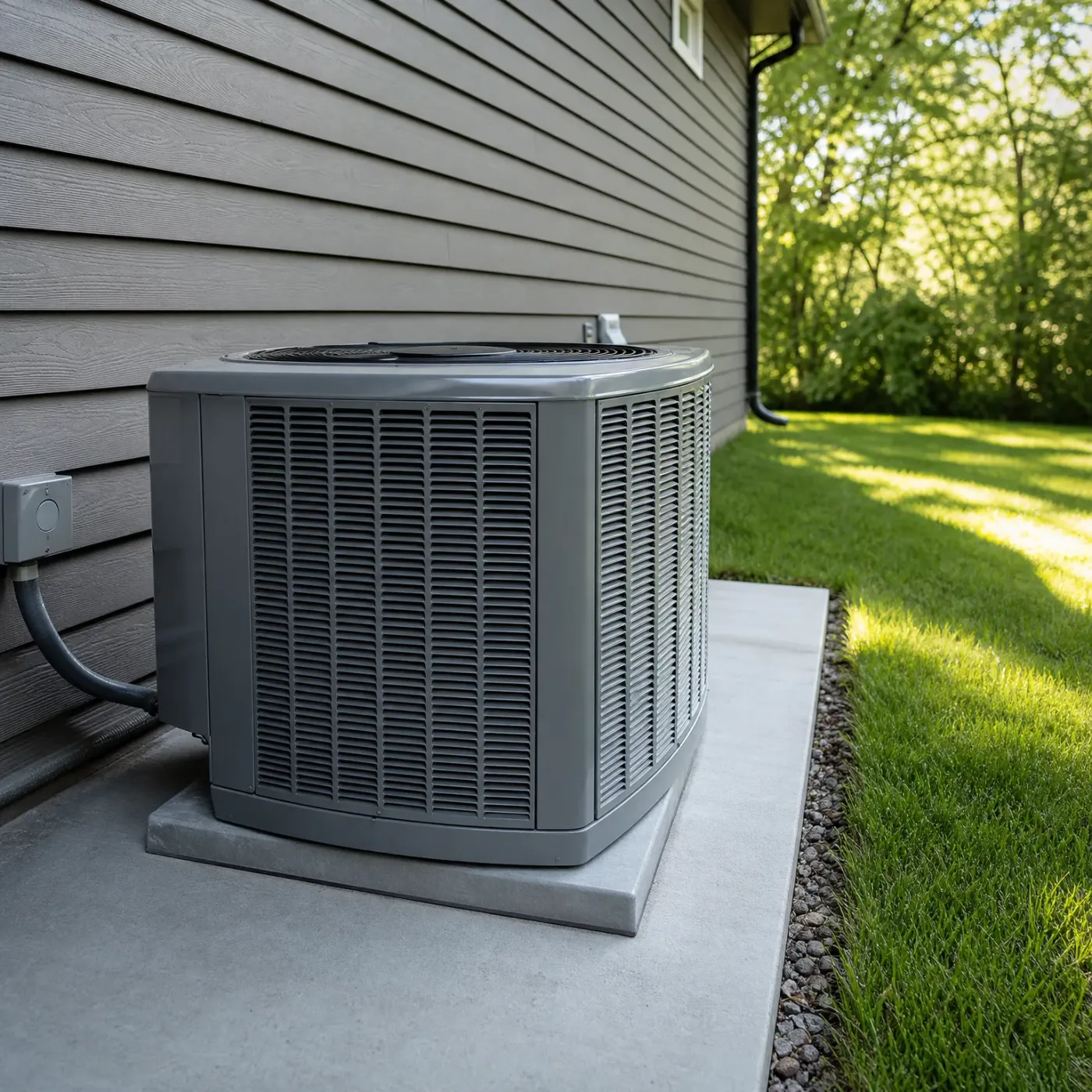
A gray outdoor air conditioner condenser unit on a concrete pad beside a house with horizontal lap siding, with an electrical disconnect box and conduit on the wall, a downspout, gravel edging and a green lawn with trees to the right.

Let someone else find the pro

Hand it over

Your request goes to one pro, not a list of companies.

It costs nothing to send, and you don't have to hire anyone.